Husbandry Services for Cruise Ships: A Unique Set of Challenges
The cornerstone of effective husbandry services for cruise ships is exhaustive pre-planning, with berthing arrangements often taking priority due to the sheer scale of modern vessels. Agents must coordinate with terminal operators to ensure that passenger bridges align perfectly and that all necessary doors can operate for the simultaneous loading of baggage, provisions, and garbage . This level of foresight distinguishes professional husbandry services from basic agency; it requires anticipating the physical constraints of the cruise ship against the port’s infrastructure. From coordinating tug assistance to liaising with port authorities for swift clearance, the goal is to eliminate any friction that could delay the ship’s departure or inconvenience its thousands of guests .
The Operational Nature of Cruise Vessels
Cruise ships operate on tightly structured itineraries, often with minimal intervals between voyages. Disembarkation and embarkation may occur within hours, leaving limited tolerance for procedural inefficiency. While cargo vessels may occasionally absorb minor administrative fluctuation, cruise operations are bound to published schedules that directly influence passenger logistics and commercial commitments.
This operating model shapes husbandry services in a fundamental way. Port clearance, inspection attendance, and shore coordination must be aligned precisely with turnaround timelines. Advance preparation becomes essential, as adjustments during the port stay can affect both regulatory sequencing and passenger processing.
Maintenance Under Continuous Service
Every vessel functions under a planned maintenance framework, yet cruise ships manage this responsibility within an environment of uninterrupted passenger service. Thousands of components, ranging from propulsion systems and steering mechanisms to interior fittings and public areas, are subject to scheduled checks. Maintenance intervals may be determined by time, operational hours, or usage frequency.
While much of this activity is conducted during voyages, certain inspections and verifications require port attendance or coordination with classification and flag authorities. Husbandry services for cruise ships therefore extend to facilitating technical surveys, arranging documentation submissions, and coordinating specialist contractors. The challenge lies in integrating these requirements without interfering with the guest experience.
The Complexity of Turnaround Port Calls
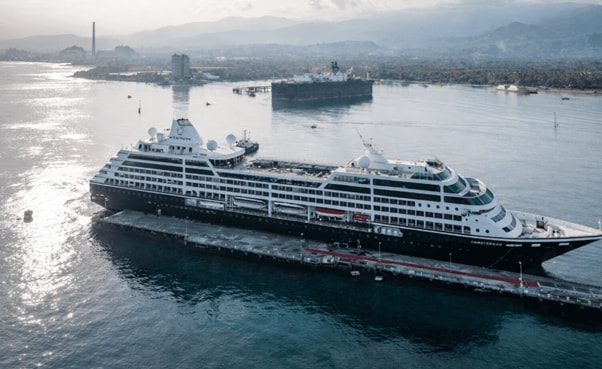
Turnaround days represent one of the most demanding phases of cruise operations. Passenger disembarkation, immigration clearance, baggage handling, provisioning deliveries, waste management, and technical attendance converge within a narrow timeframe. Each function must proceed in a carefully sequenced manner to prevent congestion and ensure safety.
In Indonesian ports, this complexity is further shaped by local regulatory frameworks and administrative procedures. Husbandry services must integrate immigration formalities, port health requirements, customs documentation, and harbour authority coordination into a cohesive operational plan. Structured sequencing supports regulatory compliance while preserving schedule integrity.
Scheduled Intervals of Intensive Maintenance
Certain maintenance activities cannot be conducted while a vessel remains in active passenger service. Wet dock periods and dry dock intervals are scheduled to address underwater inspections, hull treatment, or major equipment replacement. These intervals are planned meticulously and involve coordination across technical teams, surveyors, and port administrations.
Although such interventions may not occur during every Indonesian port call, preparatory inspections and documentation reviews frequently do. Husbandry services play a critical part in facilitating classification surveys, safety verifications, and compliance reviews within the constraints of operational schedules.
Environmental and Health Considerations
Cruise ships operate under heightened public and regulatory visibility due to passenger capacity and environmental sensitivity. Waste management, sanitation standards, and port health procedures are subject to detailed oversight. Compliance must not only be achieved but also demonstrably documented.
Indonesian ports apply national maritime regulations within locally administered frameworks. Husbandry services for cruise ships must therefore reflect familiarity with port specific practices while ensuring alignment with broader statutory standards. Accurate documentation and disciplined coordination reduce the potential for inspection complications.
Coordinating a Broad Operational Network
Cruise port calls involve interaction with terminal operators, immigration officials, port health authorities, local suppliers, surveyors, and technical contractors. The diversity of stakeholders increases the need for structured communication and clear accountability.
Effective husbandry services integrate these participants within a unified operational timeline. Advance alignment of documentation, service attendance, and authority approvals supports orderly execution. When coordination is conducted with foresight, operational continuity can be maintained even within complex passenger environments.

Sustaining Stability Within a Passenger-Focused Framework
Cruise vessels combine maritime technical discipline with hospitality expectations. Port calls must therefore satisfy regulatory obligations while maintaining the standards associated with international cruise travel. The operational margin for misalignment is correspondingly narrow.
Husbandry services for cruise ships require detailed preparation, regulatory awareness, and precise sequencing. When these elements are managed cohesively within Indonesian ports, the complexity of operations remains largely unobtrusive. The result is a port call that supports safety, compliance, and the seamless continuation of the voyage.
BALANCIA SHIP AGENCY
HQ Address : Komplex Ruko Golden City Block C No.3A, Batam City, Indonesia 29432
www.balancia.co.id
Mobile Ph. : +628112929654
Office Ph. : +627784883769
References:
- Bryce, J. (2019). How often does a cruise ship get a maintenance check? Retrieved from Quora: https://www.quora.com/How-often-does-a-cruise-ship-get-a-maintenance-check
- DeLaurentis, J. (2022, August 22). What is a cruise ship dry dock? Retrieved from Royal Caribbean: https://www.royalcaribbeanblog.com/2022/08/22/what-cruise-ship-dry-dock