The Importance of Proactive Communication for Effective Ship Agency Services in Indonesia
Effective ship agency services in Indonesia depend not only on regulatory knowledge and operational capability, but also on disciplined and proactive communication. Port calls involve multiple authorities, terminal operators, and service providers operating within defined procedural frameworks. When information is transmitted late or inconsistently, operational sequencing may be disrupted. Proactive communication ensures documentation alignment, timely service coordination, and stable clearance execution.
In Indonesia’s diverse port environment, communication discipline directly influences port call stability and customer confidence.
Communication as an Operational Control Framework
Ship agency operations require structured coordination among customs, immigration, quarantine, harbor master offices, terminal management, pilots, tug operators, and vessel management teams. Each authority processes submissions within established sequencing requirements.
When updates are delayed or incomplete, procedural gaps may occur. Clearance stages may be affected, service arrangements may require adjustment, and operational timing may become uncertain. Through proactive communication, information is shared early, verified promptly, and distributed systematically across stakeholders.
Operational predictability is strengthened when communication is managed as a controlled process rather than reactive correspondence.
Pre-Arrival Documentation Alignment
A significant portion of port call performance is determined during pre-arrival preparation. Crew lists, cargo manifests, statutory certificates, and health declarations must be submitted accurately and in accordance with port-specific requirements.
Discrepancies identified late in the process often result in clarification requests that extend administrative handling time. When documentation is reviewed and aligned in advance, inconsistencies can be corrected prior to formal submission.
Proactive communication enables early clarification with vessel operators and regulatory authorities. Administrative exposure is thereby reduced, and clearance execution is stabilized.
Real-Time Operational Updates
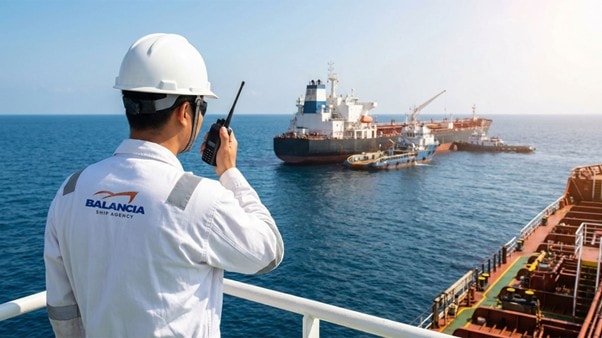
Arrival time revisions, berth allocation adjustments, inspection scheduling changes, and weather-related developments require continuous information flow. If updates are not communicated promptly, service providers may not be properly synchronized with vessel movements.
Through structured reporting systems, estimated time of arrival adjustments and service confirmations are transmitted consistently. Pilots, tug operators, terminal representatives, and inspection authorities can adjust preparations accordingly.
Operational sequencing is preserved when real-time updates are shared transparently and without delay.
Managing Unforeseen Developments
Maritime operations may encounter unexpected circumstances, including inspection findings, documentation queries, technical deficiencies, or environmental constraints. In such situations, the manner in which communication is managed significantly influences operational impact.
When developments are reported promptly, supported by factual detail and accompanied by corrective action plans, uncertainty is reduced. Stakeholders remain informed regarding expected timelines and procedural steps.
Proactive communication does not eliminate unforeseen events, but it mitigates their operational consequences through transparency and coordination.
Customer Confidence and Service Reliability
Vessel operators rely on local agents to represent their interests within port environments that may differ from one location to another. Clear reporting, milestone confirmation, and structured status updates contribute to operational confidence.
Effective ship agency services are reinforced when communication remains consistent throughout the port call cycle. Pre-arrival planning, arrival processing, cargo coordination, and departure formalities are supported by documented updates and confirmation procedures.
Reliability is strengthened when communication standards are maintained with discipline.
Digital Platforms Supporting Structured Communication
Modern ship agency operations increasingly incorporate digital platforms for document exchange, clearance monitoring, and service tracking. Centralized systems allow submissions, approvals, and inspection outcomes to be recorded systematically.
While digital tools enhance efficiency, structured communication protocols remain essential. Technology supports proactive communication by reducing fragmentation, but clarity and timing remain dependent on disciplined information management.
In Indonesian ports, where procedural accuracy and timing are closely linked, digital coordination reinforces operational stability.
Communication as a Core Element of Effective Ship Agency Services
Proactive communication remains a foundational component of effective ship agency services in Indonesia. Documentation accuracy, synchronized updates, and transparent reporting reduce administrative exposure and support procedural continuity.
When information is verified early, transmitted consistently, and monitored throughout the port call cycle, operational stability is strengthened. Effective ship agency services are therefore defined not only by procedural capability, but by the discipline applied in managing communication across all stakeholders.
In a regulatory environment where timing, compliance, and coordination determine performance outcomes, proactive communication functions as an essential mechanism for reliable and professional port agency execution.
Our Approach to Proactive and Structured Communication
In Indonesian ports where procedural accuracy and timing directly affect vessel performance, we implement structured communication protocols as a standard operating principle. Documentation is reviewed thoroughly prior to submission. Regulatory requirements are verified against local authority standards. Service arrangements are confirmed with clear sequencing to prevent procedural gaps.
Throughout the port call, progress updates are communicated in a consistent and structured manner. Arrival formalities, inspection stages, cargo coordination, and departure clearance are monitored systematically. When operational issues arise, they are addressed promptly with factual reporting and defined corrective steps to preserve continuity.
Effective ship agency services are strengthened through controlled information flow and disciplined coordination. For vessel operators seeking dependable port representation in Indonesia, we stand prepared to provide structured oversight, regulatory alignment, and consistent communication across all major Indonesian ports.
BALANCIA SHIP AGENCY
HQ Address : Komplex Ruko Golden City Block C No.3A, Batam City, Indonesia 29432
www.balancia.co.id
Mobile Ph. : +628112929654
Office Ph. : +627784883769
References:
- Jha, A. K. (2023). Fundamentals of Shipping Agency. Retrieved from Sea and Beyond: https://www.seaandbeyond.com/blogs/maritime-shipping-agency
- Yuliantini, S. S. (2022). SERVICES QUALITY OF SHIP AGENCY AND SERVICES INTERPERSONAL COMMUNICATION IN SHIPPING COMPANIES. Devotion, 699-706.