Ship Agency Support for Remote Underwater Inspections in Indonesia
Inspection of underwater structures has evolved beyond traditional diving methods. Remote underwater inspections in Indonesia are increasingly carried out using advanced technologies such as remotely operated vehicles, allowing vessels to assess their condition while remaining in operation. This approach supports safer execution, faster results, and reduced operational disruption.
Advancing Inspection Methods Through Technology
Remote inspection systems are designed to operate in environments where human access is restricted or presents higher risk.
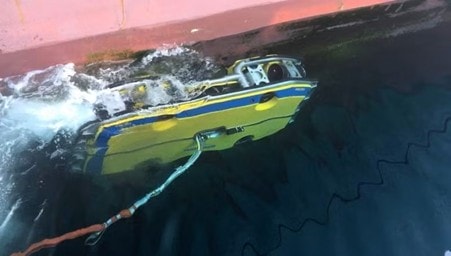
Using compact and maneuverable underwater vehicles, inspections can be performed without direct diver involvement. These systems are capable of reaching deep areas, confined spaces, and structurally complex sections of the vessel that may be difficult to access through manual inspection.
Their ability to be deployed quickly allows operators to respond to inspection requirements without waiting for specialized diving teams. This flexibility is particularly valuable in ports with tight schedules or limited service windows.
Key Functions of Remote Underwater Inspections
Remote inspection systems are widely used for evaluating vessel structures while afloat, providing a detailed understanding of underwater conditions without requiring dry docking.
Hull surfaces can be examined for corrosion, coating condition, and marine growth accumulation. Propellers and rudders can be inspected to assess performance impact, detect damage, or identify imbalance issues.
These inspections are often conducted as part of underwater survey programs that support classification requirements. In many cases, they can be used as an alternative to scheduled dry docking, allowing vessels to maintain operational continuity while still meeting regulatory expectations.
In addition to vessel inspections, these systems are also applied in assessing port infrastructure, offshore installations, and subsea systems where direct access is limited.
Technology Behind Remote Inspections
Modern inspection systems combine multiple technologies to deliver accurate and reliable results under varying conditions.
Remotely operated vehicles are equipped with high-definition cameras that provide real-time visual feedback to operators. This allows immediate assessment of structural conditions and supports faster decision making during the inspection process.
In environments where visibility is limited, sonar systems are used to generate detailed images of underwater structures. These systems allow operators to identify anomalies, even in turbid or low-visibility waters commonly found in certain Indonesian ports.
Additional sensors are used to measure structural integrity. Tools such as corrosion monitoring probes and thickness measurement devices provide quantitative data, supporting more precise evaluation of the vessel’s condition.
Together, these technologies create a comprehensive inspection approach that combines visual assessment with measurable data.
Safety and Operational Efficiency
One of the primary advantages of remote inspection is the significant reduction in operational risk.
By eliminating the need for divers in hazardous environments, inspections can be conducted safely even in areas with strong currents, limited visibility, or restricted access. This reduces exposure to safety incidents while maintaining inspection quality.
Operational efficiency is also improved. Inspections can be carried out while the vessel remains at anchorage or during limited port stays, avoiding extended downtime associated with traditional methods.
The availability of real-time data allows immediate evaluation and decision making. This enables technical teams to determine the next steps without delay, whether further maintenance is required or operations can continue as planned.
Application in Indonesian Waters
Operational conditions in Indonesian waters vary widely across regions.
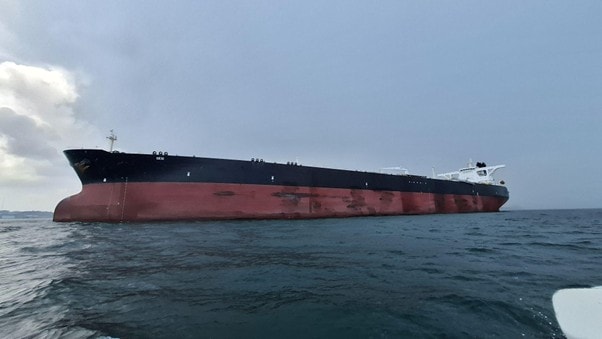
Certain ports present challenges such as poor underwater visibility, strong tidal currents, or high vessel traffic density. In such environments, traditional diving operations may be restricted or require additional safety measures.
Remote inspection systems provide a more adaptable solution under these conditions. They can be deployed efficiently at anchorage or offshore locations where access is limited, allowing inspections to proceed without disrupting surrounding operations.
This flexibility has made remote underwater inspections increasingly preferred for vessels calling Indonesian ports, particularly when time and safety are critical considerations.
Coordination Requirements for Remote Inspections
While technology enables the inspection itself, successful execution depends on proper coordination.
Approval from port authorities must be obtained prior to commencing operations. This includes ensuring that inspection activities comply with local regulations and do not interfere with vessel traffic or port movements.
Operational planning must also consider timing, location, and environmental conditions. Equipment mobilization, service provider readiness, and vessel availability must be aligned to avoid delays.
Communication between the vessel, inspection team, and port authorities must be maintained throughout the process. Clear coordination ensures that the inspection can be carried out safely, efficiently, and without operational disruption.
Supporting Remote Inspections Through Ship Agency
Remote underwater inspections require both technical capability and structured coordination to be carried out effectively.
Each stage, from planning and approval to execution and reporting, must be aligned within a limited operational window. This requires close coordination between the vessel, inspection provider, and local authorities.
In practice, the ship agency manages this process by arranging permits, coordinating service providers, and ensuring that all operational requirements are met before the inspection begins.
This includes scheduling the operation, facilitating communication between all parties, and ensuring compliance with local port regulations. Timing, safety considerations, and operational constraints are carefully managed to ensure smooth execution.
With proper coordination, remote underwater inspections can be completed without interrupting vessel operations, allowing technical assessments to be conducted efficiently while maintaining operational continuity.
BALANCIA SHIP AGENCY
HQ Address : Komplex Ruko Golden City Block C No.3A, Batam City, Indonesia 29432
www.balancia.co.id
Mobile Ph. : +628112929654
Office Ph. : +627784883769
References:
- A. F. Ali and M. R. Arshad, “Ship Hull Inspection using Remotely Operated Vehicle,” 2022 IEEE 9th International Conference on Underwater System Technology: Theory and Applications (USYS), Kuala Lumpur, Malaysia, 2022, pp. 1-4, doi: 10.1109/USYS56283.2022.10072609.
- Varghese, R. M., & Thomas, A. (2025, August 13). Top 20 Uses of ROV for Underwater Inspection and Maintenance. Retrieved from EyeROV: https://eyerov.com/blogs/top-20-rov-uses-for-underwater-inspection-maintenance/