

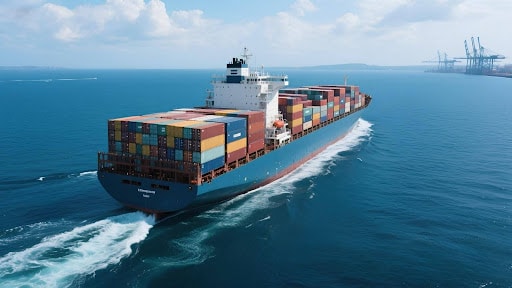
Cargo Ship Speed: How Fast Do They Really Go at Sea?
Watching a massive cargo ship glide steadily across the ocean, one might assume it’s operating at full power, delivering goods at top speed across continents. These vessels, after all, rank among the largest and most powerful machines in motion today. Yet despite their potential for high velocity, most cargo ship speed averages remain at surprisingly moderate levels. The reason? In the world of maritime logistics, speed is not always the smartest strategy. In fact, when it comes to global shipping, slower sailing often means greater efficiency, safety, and long-term value.
How Fast Can a Cargo Ship Go?
Let’s start with the impressive Maersk Boston, one of the fastest cargo ships on the water. This container giant can reach up to 37 knots—that’s about 42.5 mph (68 km/h). In theory, it could sail from Dublin to Lisbon in just over 24 hours, carrying tens of thousands of tons of cargo.
But despite such impressive capabilities, ships like this rarely operate at top speed.
So, What Is the Average Speed of Cargo Ships?
In practice, most vessels sail much slower than their maximum capacity. The actual cruising speed depends on the ship’s type and purpose. Here’s a breakdown of typical average service speeds across vessel categories:
| Ship Type | Average Speed |
|---|---|
| Container Ships | 14 knots |
| Oil/Chemical Tankers | 10 knots |
| Bulk Carriers | 11 knots |
| Vehicle Carriers | 15 knots |
| General Cargo Ships | 9 knots |
These averages reflect careful consideration of operational efficiency, fuel economy, and global maritime regulations.
Why Cargo Ships Choose to Sail Slower
So, if ships can go faster, why don’t they?
- Fuel Efficiency Matters
Fuel is one of the largest operating costs in shipping. As speed increases, fuel consumption rises exponentially. Doubling a ship’s speed can quadruple fuel usage, leading to unsustainable costs—especially on long-distance routes.
- Environmental Responsibility
Slower sailing reduces greenhouse gas emissions. With global pressure to cut carbon output, many shipping lines adopt “slow steaming” practices to align with environmental standards.
- Mechanical Longevity
Operating at high speeds over long durations increases wear and tear on engines and systems. Slower speeds help extend the lifespan of vessels, reduce maintenance costs, and improve reliability.
Safety in Speed Regulations
Another key reason for reduced speed? Safety. Cargo ships are enormous and don’t stop easily. At higher speeds, their ability to maneuver is limited, especially in crowded sea lanes or near ports.
When navigating congested waters, ships often reduce speed to 6–10 knots. This allows for:
- Better response time in emergencies
- More effective stopping distance
- Reduced collision risks in port or anchorage
- Easier coordination with tugboats and port pilots
While there’s no universal maritime speed limit, the International Regulations for Preventing Collisions at Sea (COLREGs) require vessels to maintain a “safe speed” depending on visibility, traffic, water depth, and nearby hazards.
Different Ships, Different Speeds
It is important to note that not all ships are built for the same purpose, and therefore their optimal speeds vary. For instance, chemical tankers are typically faster than bulk carriers, while ro-ro cargo ships (designed to carry wheeled cargo like cars and trucks) fall somewhere in between.
Here’s a closer look at the typical speed ranges for various cargo vessel types:
| Ship Category | Typical Speed Range |
|---|---|
| Mini Bulk Carriers | 8 – 13 knots |
| Oil Tankers | 9 – 15 knots |
| Chemical Tankers | 12 – 17 knots |
| Feeder Container Ships | 13 – 20 knots |
| Ro-Ro Cargo Ships | 12 – 16 knots |
| Gas Carriers | 9 – 15 knots |
These figures reflect not just the engineering of the ship but also the trade-offs between speed, cost, and fuel economy. Some owners may request slightly higher or lower speeds based on cargo type, weather conditions, and delivery schedules.
Why Slower Is Often the Best Option
Slowing down isn’t just about saving money or reducing emissions. It’s about precision. Arriving too early at port can result in anchorage delays, missed berthing windows, or even additional port charges.
Instead of sprinting across the ocean, cargo ships are scheduled to arrive just in time—minimizing wait times while aligning with logistics chains, customs schedules, and port availability.
Shipping companies, charterers, and port operators carefully coordinate estimated times of arrival (ETA) based on expected weather conditions, route distance, and the vessel’s capacity—balancing time and cost.
There’s More to Ship Speed Than You Might Think
Ship speed is not simply about moving goods from one port to another. It reflects the complexity and precision of modern maritime logistics. Behind each voyage is a strategy that prioritizes fuel efficiency, navigational safety, and environmental responsibility.
From adopting slow steaming practices to complying with harbor speed limits, the maritime industry carefully balances technical performance with long-term sustainability. Choosing to operate at lower speeds is not a sign of limitation but a conscious decision to optimize operations, reduce emissions, and ensure reliable service across the globe.
BALANCIA SHIP AGENCY
HQ Address : Komplex Ruko Golden City Block C No.3A, Batam City, Indonesia 29432
www.balancia.co.id
Mobile Ph. : +628112929654
Office Ph. : +627784883769

References:
- Cargo Ship Speed Comparison: How Fast Do They Go? (n.d.). Retrieved from Casual Navigation: https://casualnavigation.com/cargo-ship-speed-comparison-how-fast-do-they-go/
- Cristi. (2024, June 9). How fast can large cargo ships go? What is the maximum speed that they can safely travel at? Retrieved from Medium: https://medium.com/@crisri/how-fast-can-large-cargo-ships-go-what-is-the-maximum-speed-that-they-can-safely-travel-at-ae6b1f2c0155
- Dmitry. (2025, January 2). The Speed of a Cargo Ship at Sea? Compare Top 10 Types! Retrieved from Maritime Page: https://maritimepage.com/the-speed-of-a-cargo-ship-at-sea-compare-top-10-types/