Case Study: Managing a Complex Ship Spare Parts Delivery During Port Congestion
Port congestion does not only affect vessel movement. It directly impacts supporting operations, especially when time-sensitive spare parts are involved. In such situations, delivery arrangements must be adjusted quickly to ensure that vessel operations are not disrupted.
This case outlines how a spare parts delivery was managed during a period of heavy port congestion in Indonesia, where changes in vessel scheduling required immediate operational adjustments.
Initial Operational Situation
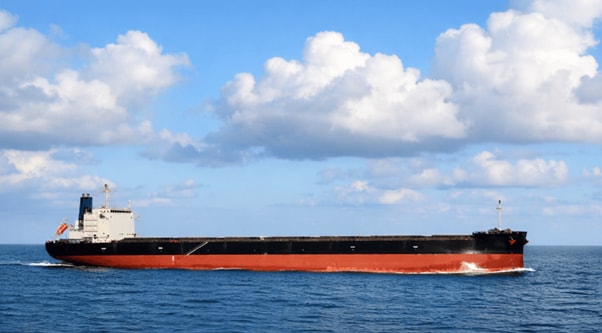
A bulk carrier was scheduled to call at an Indonesian port for cargo operations. Prior to arrival, the vessel identified a critical machinery component that required replacement before departure to ensure safe continuation of its voyage.
The spare part had already been arranged by the owner and was in transit to Indonesia. The initial delivery plan was to transfer the spare part while the vessel was alongside, allowing direct access and simplified handling.
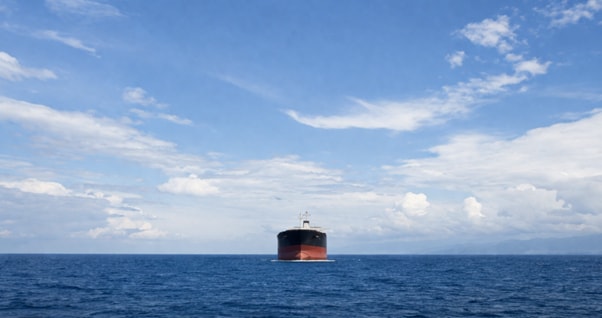
However, upon arrival, the port was experiencing significant congestion. Vessel queues were longer than expected, and berthing schedules became uncertain. The vessel remained at anchorage with no confirmed timeline for shifting alongside.
This change immediately affected the original delivery plan. Waiting for berth availability was no longer a viable option, as it would delay the repair and potentially impact the vessel’s departure schedule.
Key Operational Challenges
The absence of a confirmed berthing window created uncertainty in planning. Without a fixed schedule, it was not possible to determine when the vessel would be accessible for delivery under normal port conditions.
Access to the vessel became the next challenge. Delivery at anchorage requires additional coordination compared to berth delivery. It involves arranging service boats, securing port authority approval, and ensuring safe transfer conditions offshore.
Customs clearance also remained a critical factor. The spare part needed to be processed and released without delay. Any issue in documentation or clearance procedures could result in extended holding time, directly affecting the repair timeline.
In addition, timing coordination between cargo readiness, transport availability, and vessel condition had to be aligned carefully to avoid operational gaps.
In addition, timing coordination between cargo readiness, transport availability, and vessel condition had to be aligned carefully to avoid operational gaps. Because port stays and berthing windows in the region can be highly unpredictable, mastering ship spare parts logistics requires anticipating local terminal regulations and clearance sequences rather than relying solely on estimated schedules.
Required Operational Adjustments
When congestion disrupts initial planning, immediate adjustments must be made to maintain operational continuity.
The delivery method must be reassessed based on the vessel’s actual position. In this case, anchorage delivery became the only practical option. This required early confirmation with port authorities to obtain approval for offshore transfer activities.
All permits and operational clearances needed to be arranged in parallel. This included authorization for service boat operations, coordination with port control, and alignment with local maritime regulations.
Customs handling had to be prioritized. Documentation was reviewed in advance to ensure completeness and accuracy before the spare parts arrived. This reduced the risk of delays during the clearance process.
Communication with the vessel was maintained continuously. Delivery timing was aligned with anchorage conditions, including weather, traffic density, and the vessel’s operational readiness to receive the spare parts.
Execution of Delivery
Once the spare parts arrived in Indonesia, the operation moved according to the revised plan.
Customs clearance was completed on a priority basis, allowing immediate release of the cargo. The spare parts were then transported to the designated loading point for offshore delivery preparation.
A suitable service boat was arranged, considering safety, load capacity, and prevailing sea conditions. Coordination between the boat operator, vessel crew, and port control ensured that the transfer could be conducted without disruption.
The delivery was carried out at anchorage under controlled conditions. Proper timing was maintained to avoid congestion in anchorage traffic and to ensure safe transfer of the spare parts onboard.
Despite the limitations caused by port congestion, the operation was executed within the required timeframe.
Outcome
The spare parts were successfully delivered without waiting for berth availability. This allowed onboard repair work to proceed as planned while the vessel remained at anchorage.
As a result, the vessel avoided additional delays that could have extended beyond the congestion period. Departure scheduling remained largely unaffected, and operational continuity was maintained.
From a commercial perspective, this reduced the risk of extended off-hire time and minimized potential financial impact associated with delays.
Operational Insight
Port congestion requires flexibility in both planning and execution.
Delivery arrangements should not rely solely on berth access. Alternative methods, such as anchorage delivery, must be considered early when congestion is identified.
Advance preparation of documentation plays a key role in avoiding delays. Customs clearance processes should be anticipated and managed proactively.
Continuous communication between all parties ensures that adjustments can be made quickly. Real-time coordination allows operations to remain aligned even when conditions change.
Coordination Role
In this case, Balancia Ship Agency managed the coordination between the vessel, suppliers, port authorities, and service providers.
This included reassessing the delivery plan, securing offshore delivery approval, handling customs clearance, arranging transportation, and ensuring that all operational steps were aligned within a compressed timeline.
Through structured coordination and clear communication, the delivery was completed efficiently despite the constraints caused by port congestion.
BALANCIA SHIP AGENCY
HQ Address : Komplex Ruko Golden City Block C No.3A, Batam City, Indonesia 29432
www.balancia.co.id
Mobile Ph. : +628112929654
Office Ph. : +627784883769