

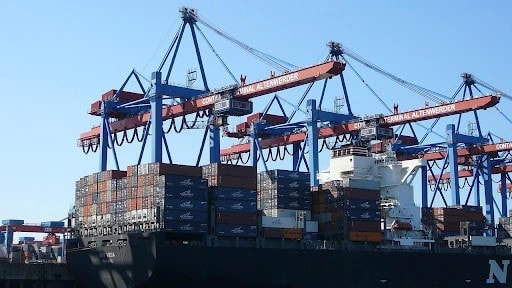
Shipping Demand Growth and Industry Shifts: What to Expect in 2025
The global shipping industry is going through another year full of change. While many hope for smoother seas ahead, the reality is that the challenges facing ocean freight in 2025 are complicated and tightly connected. Shipping demand growth is expected, but several factors are shaping how goods move around the world. From geopolitical tensions and port congestion to disruptions in trade, these issues are pushing the shipping sector to constantly adjust and evolve.
For companies like Balancia, which serve as ship agents, staying informed and ready to respond to these shifts is essential. The term Shipping Demand Growth closely relates to the ongoing need for strong, reliable partnerships that keep supply chains flowing smoothly despite the uncertainty.
A Shift in Global Trade Routes
One of the biggest changes this year comes from shifting global trade routes. Due to the crisis in the Red Sea that began in late 2023, many vessels have been forced to avoid the Suez Canal. Instead, they’re taking a much longer path around the Cape of Good Hope. This rerouting adds roughly 10 to 14 days and an extra 3,500 nautical miles to journeys from Asia to Europe. Because of this, about 10% of the world’s container fleet capacity is being used just to cover these longer distances.
This reroute has had a ripple effect on ports worldwide. Delays, missed schedules, and rising costs are now common problems. Shipping prices have temporarily increased due to these challenges, but this may not last. Once the Suez Canal is safe and fully reopened, prices could drop quickly as things return to normal. Until then, the industry has to prepare for ongoing uncertainty.
Political Pressures and Protectionism
Tariffs and trade policies are also shaping shipping demand this year. New tariffs from the U.S. government have caused many importers to rush their shipments. Some have even switched to air freight to beat tariff deadlines, especially when trading with China. This sudden surge has pushed prices higher and put extra strain on logistics.
On top of that, importers now need bigger customs bonds to cover increased duties. Smaller companies are feeling the pinch, having to provide more funds or guarantees to keep their shipments moving. These financial pressures affect overall market confidence and could slow down shipment volumes in the future. Still, global trade keeps growing, and shipping demand remains on the rise.
Port Congestion: An Increasing Problem
Port congestion is becoming a bigger headache than even an oversupply of ships. As vessels face delays or get rerouted, many end up arriving at ports simultaneously, causing bottlenecks. Busy ports like Singapore and several in Europe are already struggling under the pressure. If the Suez Canal reopens fully all at once, congestion might get even worse, with delayed ships rushing to pass through.
Such disruptions can lead to blank sailings, when ships skip scheduled stops, or unexpected changes to delivery times. For shipping companies, this means higher costs and wasted time. For customers, it means delays and uncertainty. This is one of the key ways Balancia helps by managing port calls efficiently to reduce wait times and keep things moving.
Alliance Changes and Capacity Control
Shipping alliances have shifted as well. Big carriers like Maersk and Hapag-Lloyd have formed new partnerships, such as the Gemini Alliance, while others like MSC have chosen to go solo. These moves impact how shipping services are organized and how much space is available on each route.
Alliances allow carriers to manage capacity better. By controlling how many ships sail each route, they can influence prices and react to demand changes. This strategy will likely continue in 2025 as carriers try to maintain profits in a competitive market.
Demand Growth vs. Supply Chain Pressure
Market forecasts expect global container demand to grow by about 1.5% in 2025, but U.S. container volumes are projected to fall by 4.5%. These mixed signals show how trade patterns are shifting. Many companies are reducing their reliance on China by moving production to countries like Vietnam and India.
However, questions remain about whether these countries can handle the long-term shipping demand. Ports, infrastructure, and logistics all need to grow quickly to keep up. With strong coverage in Indonesian ports, Balancia is well-positioned to support vessels navigating these changes by providing reliable services and local know-how.
The Crucial Role of Ship Agencies in Uncertain Times
Working behind the scenes, ship agencies handle everything from port clearances and crew changes to cargo paperwork. A good ship agency ensures vessels spend as little time as possible in port and that all operations run smoothly and safely.
With so much uncertainty, from political conflicts to economic shifts, ship agencies like Balancia offer stability and confidence to vessel operators. Whether managing customs or helping crews disembark quickly, they keep the wheels turning even in tough times.
Looking Ahead
Despite the challenges, shipping demand continues to grow. Global trade has its difficulties, but the need for raw materials and finished goods remains strong. This creates opportunities for those ready to adapt and innovate.
The term Shipping Demand Growth, Balancia reminds us that agencies like Balancia are essential partners for shipping companies. By guiding vessels through uncertain waters, supporting every step of a port call, and providing crucial services, ship agencies help make international shipping more dependable, even in times of global change.
BALANCIA SHIP AGENCY
HQ Address : Komplex Ruko Golden City Block C No.3A, Batam City, Indonesia 29432
www.balancia.co.id
Mobile Ph. : +628112929654
Office Ph. : +627784883769
References:
- Fields, C. (2025, March 5). Shipping’s 2025 outlook brims with uncertainty. Retrieved from Baltic Exchange: https://www.balticexchange.com/en/news-and-events/news/baltic-magazine/2025/Shippings-2025-outlook-brims-with-uncertainty.html
- Kavas, S. (2025, March 7). Ocean Freight Market Outlook for 2025: Key Trends, Challenges, and Rate Implications. Retrieved from More Than Shipping: https://www.morethanshipping.com/ocean-freight-market-outlook-for-2025-key-trends-challenges-and-rate-implications/