Effective Dry Docking Preparation Steps
Effective preparation determines how efficiently dry docking progresses and how successfully maintenance objectives are achieved. Each step taken before the vessel enters the dock influences cost, time, and operational quality. Following effective dry docking preparation steps ensures that planning, coordination, and communication are managed precisely, making dry dock maintenance a structured process that minimizes risks, enhances performance, and ensures vessels return to service without disruption.
Planning and Scheduling the Docking Period
Preparation begins with a clear schedule. Dry docking is often arranged according to class requirements, machinery hours, or hull condition, so advance planning is essential. The schedule must fit the vessel’s operational commitments while allowing sufficient time for all maintenance tasks to be completed. When ship managers coordinate early with port agents and shipyards, docking slots can be secured, materials prepared, and resources allocated effectively.
Accurate scheduling also helps in managing cost control. Each day in dry dock carries expenses related to equipment use, labor, and facility occupancy. A realistic timeline supported by early coordination ensures the shipyard team, suppliers, and contractors can start work promptly, avoiding unnecessary delays. In ports such as Batam, where Balancia Ship Agency assists international clients, efficient scheduling reduces waiting time and aligns service teams for immediate mobilization.
Condition Survey and Work Scope Definition
Before docking, the vessel undergoes a detailed inspection to evaluate its condition. Hull plating, propeller systems, and sea valves are examined to determine what needs repair or replacement. Past maintenance records and previous dry docking reports are reviewed to identify recurring issues. The findings of these surveys define the scope of work, enabling the technical team to prioritize tasks and allocate resources efficiently.
Clear definition of work scope eliminates uncertainty once the vessel is inside the dock. It also ensures that shipyards can plan labor, materials, and subcontractors accordingly. When maintenance requirements are fully identified, the dry docking process becomes predictable, structured, and cost-effective. Technical coordination with class societies and support partners like Balancia further strengthens this preparation phase.
Documentation and Regulatory Preparation
A successful docking period relies on proper documentation. All statutory, class, and flag-state certificates must be up to date before the vessel enters the dry dock. Required surveys, such as those for safety equipment or structural integrity, are usually scheduled during this maintenance window. When documentation is verified in advance, administrative delays are avoided, allowing technical work to start immediately upon arrival.
Coordination with classification societies, port authorities, and insurance representatives should also be finalized before the ship’s arrival. Proper planning of these approvals supports a smooth workflow and reduces idle time in dock. Assistance from local agents helps facilitate communication and submission of paperwork, ensuring full compliance throughout the dry dock maintenance process.
Procurement and Resource Coordination
Efficient procurement is one of the most critical elements in dry docking preparation. Spare parts, coatings, anodes, and other essential materials must be available as soon as the vessel arrives. Ordering these items in advance prevents costly delays and helps maintain the work schedule. Procurement should also include tools and safety gear required for confined-space inspections, painting, and machinery work.
Logistics coordination is equally important. Deliveries must reach the shipyard at the right time and in proper condition. Customs clearance, warehousing, and local transportation are managed through reliable agents who understand port regulations and operational timelines. In Batam, Balancia’s logistical support ensures that spare parts and technical materials are delivered efficiently to the dockyard, keeping the maintenance flow uninterrupted.
Team Coordination and Safety Briefing
Each dry docking project involves multiple stakeholders, ship crews, engineers, contractors, and surveyors, all working within limited space and strict timelines. Coordination meetings are conducted before the vessel enters the dock to review the work plan, safety procedures, and communication channels. These sessions ensure that every participant understands their responsibilities and the order in which tasks must be performed.
Safety briefings remain essential. Dry dock environments present specific hazards such as working at heights, using heavy machinery, and handling chemicals. A shared understanding of these risks helps minimize accidents and maintains productivity. Regular monitoring during maintenance keeps safety compliance consistent across all stages of the operation.
Execution of Dry Dock Maintenance Work
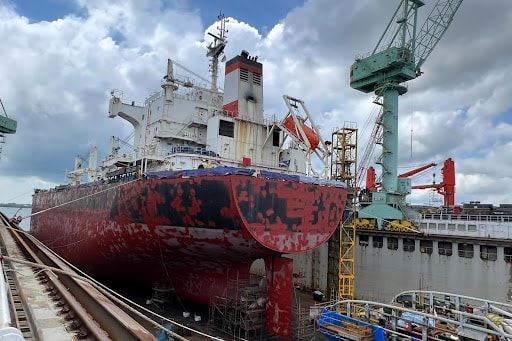
Once the vessel is secured inside the dock, maintenance activities begin according to the predefined schedule. The hull is cleaned and inspected for damage or corrosion. Blasting and coating operations are carried out to protect the steel surface and improve hydrodynamic efficiency. Propeller polishing, rudder alignment, and sea valve replacement are completed alongside inspections of ballast tanks and structural areas.
Mechanical systems such as pumps, generators, and piping are overhauled or calibrated. Throughout the process, progress is monitored through detailed reporting, ensuring transparency between the shipyard, technical management, and class surveyors. Proper sequencing of each task ensures that dry dock maintenance proceeds efficiently, allowing no overlap or conflict between work teams.
Testing, Re-floating, and Quality Verification
Upon completion of repairs and coatings, the vessel undergoes operational testing. Propulsion systems, steering gear, and safety equipment are examined to confirm functionality. Once all systems are approved, the dock is gradually flooded and the vessel is re-floated under supervision. During this phase, special attention is given to watertight integrity and mechanical performance.
Quality verification concludes the process. Class representatives and technical teams inspect completed work, reviewing test results and approving documentation. A comprehensive report is then issued to confirm compliance with class standards and maintenance specifications. This final verification ensures that the vessel is ready for service without technical risk or operational deficiency.
Post-Docking Evaluation and Reporting
After departure, a post-docking review provides valuable insight for future maintenance planning. Reports summarizing cost, time efficiency, and repair outcomes are prepared by the technical team. These evaluations identify which stages performed well and which areas could be improved in the next cycle. Transparent reporting supports better decision-making for future dry docking projects and promotes continuous improvement.
Feedback from shipyards, class surveyors, and service providers also strengthens operational partnerships. By reviewing each phase, shipowners can enhance their long-term maintenance strategy, reducing downtime and ensuring higher performance throughout the vessel’s service life.
Conclusion
Effective dry docking preparation depends on structured planning, transparent coordination, and disciplined execution. Every phase, from the initial scheduling to post-docking review, contributes to operational success and long-term vessel reliability. When each task is managed with foresight and professionalism, dry dock maintenance becomes an opportunity for improvement rather than a disruption to trade.
Balancia Ship Agency continues to assist global shipowners in achieving efficient and compliant dry docking operations across Indonesia. Through strategic coordination, technical logistics, and on-site support in Batam, Balancia ensures that every vessel receives precise and dependable maintenance service, ready for its next voyage with confidence.
BALANCIA SHIP AGENCY
HQ Address : Komplex Ruko Golden City Block C No.3A, Batam City, Indonesia 29432
www.balancia.co.id
Mobile Ph. : +628112929654
Office Ph. : +627784883769
References:
- Dry Docking procedures and general guidelines. (2023, May 24). Retrieved from Shipnet: https://blog.shipnet.no/blog/articles/dry-docking-procedures-and-general-guidelines
- Jassal, R. (2016, April 10). A Complete Guide of Bringing A Ship to Dry Dock. Retrieved from My Sea Time: https://www.myseatime.com/blog/detail/a-complete-guide-of-bringing-a-ship-to-dry-dock