Fire Safety: Prevention and Control for Docked Ships
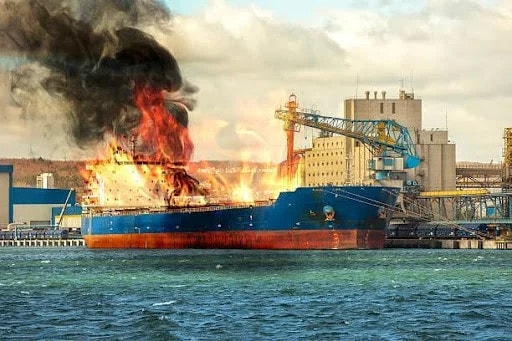
When a ship is in port, dry dock, or a shipyard, fire safety becomes more important than ever. Fires in these areas can be very dangerous and may cause injury to people, damage the ship, destroy cargo, and even affect nearby vessels or facilities. During repairs or cargo loading, many fire risks can appear. That’s why it is important to follow fire safety rules, prepare fire plans, and work together with shore-based emergency teams. This article will explain the main risks and steps to control fires when a ship is not at sea.
Fire Risks While in Port or Dry Dock
A ship faces different fire risks when it is in port or in dry dock compared to when it is sailing. One of the biggest differences is that the hull of the ship is no longer cooled by seawater. This makes the vessel more sensitive to heat and fire. In addition, dry dock operations often involve hot work such as welding or cutting, which can create sparks. These sparks can easily start a fire if there are flammable materials nearby.
Another risk is the use of wooden blocks to support the ship when it is out of the water. These wooden blocks can burn quickly if a fire starts. Fuel, oil, paint, and cleaning chemicals used during repair work can also increase the danger. Since some ships have a reduced crew during repairs, there may be fewer people available to respond quickly to an emergency. This makes fire prevention planning even more important.
Steps to Take When Fire Breaks Out
If a fire breaks out on a ship while it is docked, quick action is essential. Every second counts. First, someone must raise the fire alarm immediately to alert everyone onboard. The master or officer in charge must be informed without delay. At the same time, the port’s emergency fire service should be contacted through the correct radio or phone channels. Shipyard or terminal managers must also be notified.
If the fire grows larger, the ship’s engines should be prepared for emergency sailing, if necessary. Non-essential crew and all visitors should be evacuated safely. Those who stay onboard must be ready to help with the emergency plan.
Firefighting teams from shore, such as the city’s fire brigade or port firefighters, should not go onboard without coordination. The ship’s officer in charge must guide them and explain the situation clearly. If the fire is under control or has stopped, this must also be communicated quickly.
Working with Shore Firefighters
Shore-based firefighters and emergency teams are very important during a ship fire in port. However, they may not know the ship’s layout or its systems. That is why the master or the officer in charge must give them important information as soon as possible. This includes:
- The location of the fire
- The number and condition of crew members
- Any missing or injured people
- The cargo onboard, especially if it is dangerous
- If the engine is working or not
- Whether electrical power is on or off
- What actions have already been taken
This information helps firefighters decide how to fight the fire in the safest and fastest way. If needed, ship crew can also help guide the firefighting hoses and equipment to the right areas.
Clear communication and teamwork between the ship’s crew and the land-based team can save lives and reduce damage. Without this cooperation, efforts can become disorganized, and the fire can spread.
Fire Control Plans and Equipment
Every ship is required to have a fire control plan. This plan shows the location of all fire safety equipment, such as extinguishers, hoses, pumps, and alarms. According to SOLAS (International Convention for the Safety of Life at Sea), the fire plan must be posted near the ship’s main entrance, usually close to the gangway.
The plan should also be kept inside a special steel or glass box that is waterproof and clearly labeled. This way, emergency teams can quickly find it in case of fire. Some ports may also ask for extra copies of the fire plan in their own language.
Besides the plan, fire drills and crew training must be done regularly. Fire hoses, pumps, alarms, and breathing devices should be tested and checked often. All exits and escape routes must stay clear. Fire signs and warning labels must be easy to see and read.
These simple preparations help ensure that when a real emergency happens, everyone knows what to do and how to stay safe.
Search and Rescue: Staying Safe During Fire
When a fire happens, the first job is to stop it from spreading. But if a crew member is missing in a smoke-filled area, a rescue operation must start immediately. Only trained crew wearing full protective suits and breathing devices should go inside the smoke zone.
To avoid heat stress or exhaustion, the rescue team must work in short shifts, usually no longer than 10 to 15 minutes inside the hot zone. They should use lifelines and move in pairs, so they don’t get lost or trapped. Clear communication and emergency lighting can help the rescuers find the missing person faster.
After a person is rescued from a smoky area, they must be checked for smoke inhalation. Even if they appear fine, they should not return to the scene right away. They must rest, breathe clean air, and be monitored for signs of stress or injury.
BALANCIA SHIP AGENCY
HQ Address : Komplex Ruko Golden City Block C No.3A, Batam City, Indonesia 29432
www.balancia.co.id
Mobile Ph. : +628112929654
Office Ph. : +627784883769
References:
- Fire Prevention & Control on Ships in Port – Full Guide . (2025, April). Retrieved from Marine Public: https://www.marinepublic.com/blogs/distress/502071-fire-prevention-control-on-ships-in-port-full-guide
- Summary of SOLAS chapter II-2. (n.d.). Retrieved from IMO: https://www.imo.org/en/OurWork/Safety/Pages/summaryofsolaschapterii-2-default.aspx