
The Impact of Indonesian Weather on Ship Agency Operations: Navigating Tides, Currents, and Monsoon Seasons
Weather is one of the factors that can change the direction of ship agency operations in Indonesia. Wind, waves, rainfall, tides, currents, and monsoon patterns can affect vessel arrival, anchorage planning, crew transfer, underwater services, spare parts delivery, bunkering, and departure arrangements.
For ship agencies, weather monitoring is not only about checking forecasts. It is about understanding how changing conditions may affect each part of the port call and adjusting the operation before the risk becomes greater.
Weather Conditions in Indonesian Waters
Indonesia’s position between two oceans and two continents creates dynamic maritime conditions. Its waters are crossed by major domestic and international shipping routes, including the Indonesian Archipelagic Sea Lanes, or ALKI. Because these routes pass through different sea areas, weather conditions can vary significantly from one region to another.
A vessel operating near the Natuna Sea may face different conditions compared to a vessel near southern Java, the Arafura Sea, the Maluku Sea, or northern Papua. Some areas are more exposed to open ocean influence, while others are affected by regional wind systems, rainfall patterns, and local currents.
This makes weather awareness a practical requirement in daily ship agency operations. A port call cannot be planned only from the vessel’s ETA. It must also be reviewed based on local sea conditions, forecast updates, and operational restrictions at the port or anchorage.
Monsoon Seasons and Operational Planning
Indonesia is strongly influenced by seasonal monsoon patterns. The Asian Monsoon, generally occurring from December to February, can bring stronger winds, higher waves, and heavier rainfall to several northern Indonesian waters. Areas such as the Natuna Sea, the South China Sea, and nearby northern routes may experience more challenging conditions during this period.
The Australian Monsoon, commonly occurring from June to August, can affect southern waters, including areas near southern Java, the Indian Ocean, and parts of eastern Indonesia. During these months, stronger winds and higher waves may influence vessel movement, offshore attendance, and service timing.
For ship agencies, monsoon conditions must be considered when planning port calls. Crew change, launch boat movement, underwater cleaning, technical attendance, and delivery services may need to be adjusted if conditions become unsafe or impractical.
Wind, Waves, and Rainfall in Port Operations
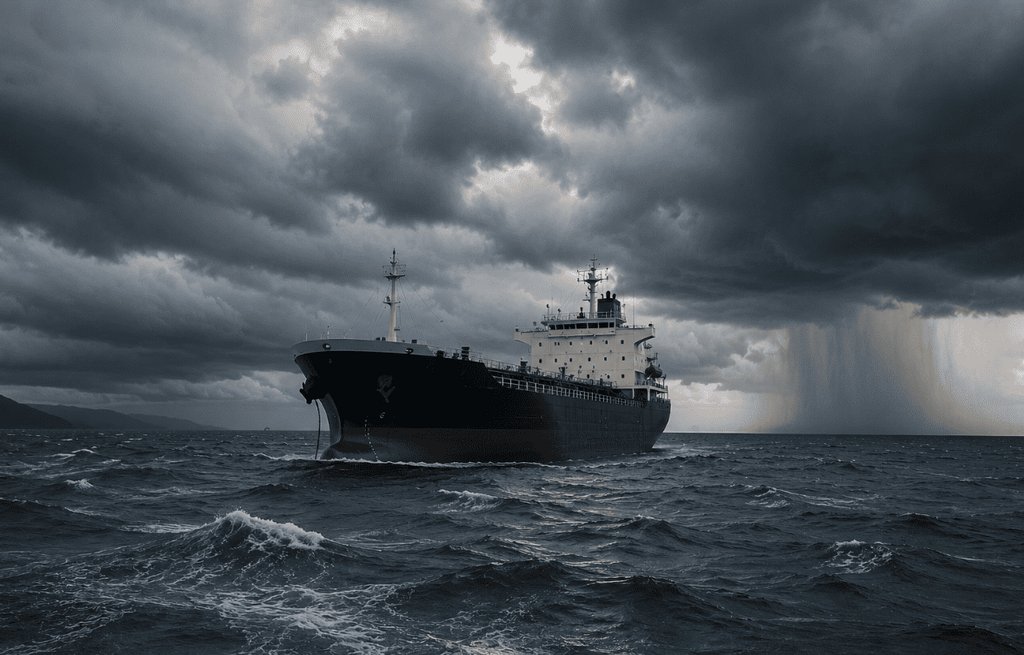
Wind and wave conditions directly affect vessel access and offshore operations. Higher waves can make boat transfer unsafe, especially when crew, technicians, stores, or spare parts need to be moved from shore to vessel at anchorage. Strong wind can also affect pilot boarding, tug assistance, vessel positioning, and general safety during attendance.
Rainfall creates a different set of challenges. Heavy rain may reduce visibility, affect road transport, slow port access, and create safety concerns during boarding or loading activities. In some cases, rain may also affect documentation movement, inspection timing, or coordination with service providers.
For activities such as underwater inspection, hull cleaning, and propeller polishing, weather becomes even more sensitive. Poor visibility, strong current, and rough sea conditions may reduce working time or make diving unsafe. In these situations, the operation must be rescheduled rather than forced.
Tides and Currents as Daily Operational Factors
Tides and currents may not always appear as major disruptions compared to storms, but they heavily dictate the practical, hourly timing of vessel logistics. To successfully navigate these localized water movements, agencies must follow a comprehensive guide to understanding tidal impact on ship agency operations. In many Indonesian ports and anchorages, vessel movement must strictly align with changing tidal windows, especially where draft limits, channel depths, or specific local restrictions are involved. Berthing, unberthing, pilotage, and tug coordination may all depend heavily on capturing suitable water levels.
In some Indonesian ports and anchorages, vessel movement may need to follow tidal conditions, especially where draft, channel depth, or local restrictions are involved. Berthing, unberthing, pilotage, and tug coordination may all depend on suitable tide levels.
Currents also affect smaller operations around the vessel. Boat approach, crew transfer, diver deployment, underwater cleaning, and floating equipment movement can become more difficult when currents are strong.
Because of this, ship agencies must coordinate closely with pilots, tug operators, terminals, launch boat providers, and service teams. The timing of each activity should be aligned not only with the vessel schedule, but also with the actual condition of the water.
Impact on Core Ship Agency Services
Weather can affect almost every service handled by a ship agency.
Crew change is one of the most affected activities because it involves travel schedules, immigration clearance, vessel access, and safe transfer. If the vessel is at anchorage and sea conditions worsen, sign-on or sign-off movement may need to be delayed or rearranged.
Spare parts delivery also depends on access. Urgent parts may already be cleared and ready onshore, but delivery cannot proceed safely if boat transfer is restricted by rough seas or heavy rain. This can affect repair planning and technician attendance.
Bunkering, fresh water supply, provisions, and waste disposal may also be affected by sea state and service boat availability. If weather interrupts these activities, the vessel’s port stay may need to be adjusted.
Underwater services are particularly dependent on weather and sea conditions. Hull cleaning, propeller polishing, and underwater inspection require safe visibility, manageable currents, and suitable wave conditions. Without these, the quality and safety of the work may be compromised.
Safety and Compliance Considerations
Weather-related decisions are closely connected to safety and compliance. International safety standards, including SOLAS principles, emphasize safe navigation and proper voyage planning. Indonesian shipping regulations also require vessel operations to be carried out with consideration for safety, weather conditions, sea traffic, and accident-prone areas.
For ship agencies, this means each weather-sensitive activity must be assessed before execution. If conditions are not suitable, the operation should be adjusted through proper coordination with the Master, port authorities, service providers, and other relevant parties.
This approach protects the crew, the vessel, service teams, and the surrounding environment. It also reduces the risk of incidents during port and anchorage operations.
Managing Weather Impact Through Coordination
Weather cannot be controlled, but its impact can be managed through preparation and communication.
Before the vessel arrives, the agency should review the vessel’s ETA, port condition, anchorage plan, tide tables, forecast updates, and local service availability. If risk is identified, alternative timing or backup arrangements should be prepared.
During the port call, updates must be shared clearly. The Master, crew, authorities, launch boat providers, technicians, suppliers, and other service teams should receive the latest information when changes occur.
This helps avoid confusion and allows the operation to be adjusted based on actual conditions rather than outdated plans.
The Value of Local Weather Awareness
Forecasts provide a useful starting point, but local experience helps interpret how those forecasts affect real operations.
A port may remain open, but launch boat movement may still be unsafe. A forecast may show moderate rain, but road access or port entry may still be affected. A vessel may be ready for underwater cleaning, but currents around the anchorage may prevent safe diving.
This is where local awareness becomes valuable. Ship agencies familiar with Indonesian waters can identify which services are more sensitive to seasonal weather, which areas are more exposed, and which timing is more practical for execution.
Supporting Ship Agency Operations in Indonesian Weather Conditions
Indonesian weather, tides, currents, and monsoon seasons can influence the success of a port call. Each operation must be reviewed based on safety, timing, service access, and local conditions.
Balancia Ship Agency supports vessel operations by monitoring weather-related factors, coordinating with authorities and service providers, and adjusting operational plans when conditions change. Crew change, spare parts delivery, underwater services, bunkering support, and anchorage attendance are handled with attention to safety and practical execution.
With proper planning and local coordination, the impact of Indonesian weather on ship agency operations can be managed more effectively, allowing vessel calls to proceed with better control.
BALANCIA SHIP AGENCY
HQ Address : Komplex Ruko Golden City Block C No.3A, Batam City, Indonesia 29432
www.balancia.co.id
Mobile Ph. : +628112929654
Office Ph. : +627784883769
References:
- Fathurohman, A., Napitupulu, G., Fujiawati, G., & Napitupulu, M. (2025). IMPACT OF SIGNIFICANT WAVE HEIGHT, WIND SPEED, AND. Bulletin of the Marine Geology, 44-61.
- Katavouta, A., Polton, J. A., & Harle, J. D. (2022). Effect of Tides on the Indonesian Seas Circulation and Their Role on the Volume, Heat and Salt Transports of the Indonesian Throughflow. Journal of Geophysical Research: Oceans, 1-29.