Ship Agency Support for Emergency Medical Evacuations in Batam: A Lifesaving Service
Emergency medical evacuations at sea require fast decisions, clear communication, and proper coordination between the vessel and shore-side support. When a crew member becomes seriously ill or injured onboard, every step must be handled quickly while still following safety, medical, and regulatory procedures. Ship agency support helps connect the vessel with the right local response so the patient can be moved to medical care as safely and efficiently as possible.
When MedEvac Support Is Needed
MedEvac support is needed when the crew member’s condition cannot be safely handled onboard. This may include serious injury, severe illness, breathing difficulty, stroke symptoms, chest pain, major trauma, or any condition that requires urgent hospital treatment.
In Batam, this situation may involve vessels at anchorage or alongside. The first decision usually comes from the Master, based on the crew member’s condition and available onboard medical support. Once evacuation is needed, the ship agency begins shore-side coordination immediately.
Initial Information from the Vessel
The ship agency needs clear information before arranging the evacuation. This helps determine the safest and fastest response.
The vessel should provide the crew member’s name, nationality, rank, symptoms, condition, mobility status, medical history if available, and current vessel position. The agency also needs to know whether the vessel is alongside or at anchorage, and whether the patient can move independently or needs stretcher support.
Accurate information helps the agency coordinate the correct medical provider, transfer method, and authority clearance in Batam.
Medical Coordination in Batam
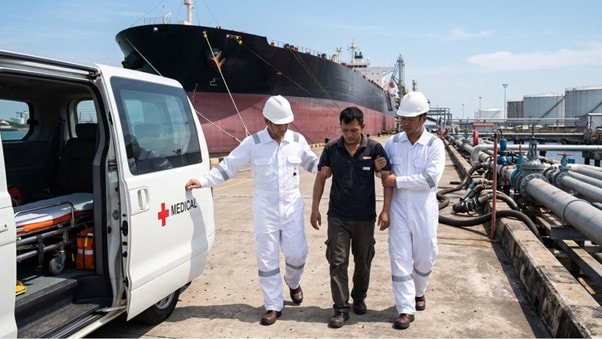
The ship agency contacts the appropriate medical facility and arranges ambulance support.
If the vessel is at Batam anchorage, the agency also coordinates boat transfer from the vessel to shore. The receiving hospital must be informed in advance so the patient can be admitted quickly upon arrival.
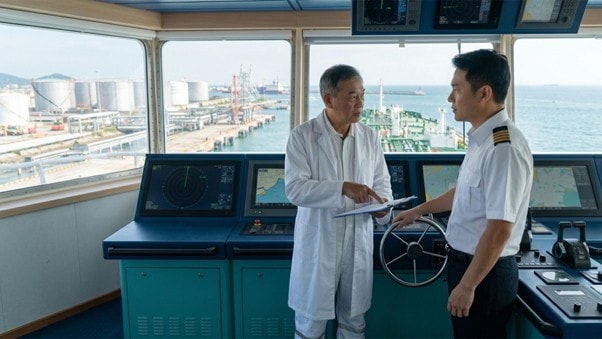
For serious cases, the agency may also coordinate with a doctor or medical response team to assess whether the patient needs special handling during transfer.
Port and Authority Clearance
MedEvac still needs to follow local procedures. If the patient is a foreign crew member, immigration handling must be arranged urgently to allow shore access for medical treatment. Securing these multi-agency clearances under pressure requires a highly systematic approach, especially when processing steps must run concurrently to save time. This exact workflow is analyzed in our case study on successfully managing emergency medical evacuations, which demonstrates how administrative bottlenecks are bypassed during time-sensitive maritime crises.
The ship agency coordinates with port health, port authority, immigration, and other relevant offices so the patient can be disembarked legally and safely. If the patient is a foreign crew member, immigration handling must be arranged urgently to allow shore access for medical treatment.
For health-related cases, port health may request medical details or supporting declarations before approving disembarkation.
Transfer from Vessel to Shore
The transfer method depends on the vessel’s location and the patient’s condition.
If the vessel is alongside, the patient can usually be moved directly from vessel to ambulance. If the vessel is at anchorage, boat transfer must be arranged. This requires coordination between the vessel crew, boat operator, medical team, and shore team.
The ship agency monitors timing closely so the ambulance is ready when the patient reaches shore.
Hospital Admission and Case Updates
After arrival at the hospital, the ship agency supports admission and communication.
This may include hospital registration, sharing medical updates with the vessel owner or manager, assisting with billing coordination, and arranging documents requested by the hospital or authorities.
Clear updates are necessary so the vessel side can make decisions about treatment, replacement crew, or further travel arrangements.
Repatriation and Follow-Up
After treatment, the crew member may need repatriation.
The ship agency can assist with medical clearance, fit-to-fly documents, flight arrangements, immigration formalities, and medical escort if required. If the crew member must remain under treatment, the agency continues to coordinate with the hospital and related parties until the next step is confirmed.
Main Ship Agency Support During MedEvac
Ship agency support during emergency medical evacuations usually includes:
- Receiving the emergency request from the vessel
- Coordinating with port health, port authority, and immigration
- Arranging ambulance and hospital admission
- Organizing boat transfer if the vessel is at anchorage
- Supporting medical documentation and clearance
- Updating the vessel owner or manager during the case
- Assisting with repatriation after treatment
These steps often happen at the same time, so fast communication and local coordination are essential.
Supporting MedEvac in Batam
MedEvac in Batam depends on speed, proper clearance, and safe transfer arrangements.
Balancia Ship Agency supports emergency medical evacuations by coordinating the vessel, local authorities, ambulance providers, hospitals, and transport teams. Each step is handled with attention to urgency, compliance, and patient safety, helping the crew member reach medical care as quickly as possible.
BALANCIA SHIP AGENCY
HQ Address : Komplex Ruko Golden City Block C No.3A, Batam City, Indonesia 29432
www.balancia.co.id
Mobile Ph. : +628112929654
Office Ph. : +627784883769
References:
- Medical help on board. (n.d.). Retrieved from IMHF: https://imhf-portal.org/maritime-help-on-board/
- Tucker, D. (2025, June 26). Emergency medical preparedness at sea: Are you ready? Retrieved from Ideagen: https://www.ideagen.com/thought-leadership/blog/emergency-medical-preparedness-at-sea