
Ship Agencies and Lay-Up Vessels in Indonesia: A Comprehensive Guide
Placing a commercial vessel into a prolonged period of inactivity requires navigating a complex web of maritime bureaucracy. An experienced ship agency plays an indispensable role in securing the necessary permissions from local port authorities and the Directorate General of Sea Transportation. Because indonesia shipping laws mandate strict security, hull maintenance, and safety protocols during a lay up period, having a dedicated on-the-ground team ensures your vessel meets all national criteria without risking heavy administrative penalties.
What Are Lay-Up Vessels in Indonesia?
A lay-up vessel is a ship that is temporarily taken out of commercial operation while being preserved for future use. The vessel is not trading, but it still requires supervision, maintenance, documentation, and local support.
Shipowners may consider lay-up when market conditions are weak, vessel employment is unavailable, a project is postponed, or the vessel is waiting for repair, dry docking, or future deployment. In simple terms, a lay-up ship is not abandoned. It is still an active asset that must be protected.
For vessels placed in Indonesian waters, the process must be handled carefully. Indonesia has many ports, anchorages, marine service providers, and shipyard areas, but each location may have different procedures and operational conditions. This is why local coordination becomes important from the planning stage.
Why Shipowners Lay Up Vessels
A vessel may be laid up when operating costs are no longer justified by current income or when the vessel is temporarily not required for service. This can happen in shipping, offshore, project cargo, tanker, bulk, and specialized vessel segments.
Common commercial reasons include weak charter demand, project gaps, repositioning strategy, seasonal inactivity, or waiting for market recovery. Technical reasons may include preparation for repairs, survey planning, or dry docking.
The main purpose is usually to reduce unnecessary operating expenses while keeping the vessel in a condition that allows future reactivation. However, cost saving should not come at the expense of safety, compliance, or asset protection.
Main Types of Lay-Up Ships
The lay-up method depends on the expected duration, technical condition, crew plan, and reactivation target.
| Lay-up type | Description | Reactivation |
| Hot lay-up | The vessel is inactive but key systems remain operational. Crew is usually kept onboard for maintenance and readiness. | Faster |
| Warm lay-up | The vessel operates under reduced condition with controlled preservation and limited activity. | Moderate |
| Cold lay-up | Most machinery is shut down, crew is reduced, and preservation becomes more extensive. | Longer |
| Long-term lay-up | The vessel is preserved for an extended inactive period and may require major checks before returning to service. | More complex |
Hot lay-up is usually chosen when the vessel may return to service within a shorter period. Cold lay-up is more suitable when the vessel is expected to remain inactive for a longer time. The choice affects manning, maintenance, class requirements, insurance conditions, and future reactivation cost.
Why Indonesia Can Be Considered for Lay-Up Vessels
Indonesia can be considered for lay-up vessels because of its strategic location in Southeast Asia and access to many maritime service points. Vessels operating near Singapore, Malaysia, Batam, Karimun, Jakarta, Kalimantan, Sulawesi, or eastern Indonesia may find Indonesian waters practical for temporary inactivity.
Selected Indonesian areas offer access to:
- Anchorage and port support
- Launch boat services
- Crew movement arrangements
- Fresh water and provision supply
- Spare parts delivery
- Underwater inspection and hull cleaning
- Technician attendance
- Shipyards and repair facilities in certain locations
However, a suitable lay-up location is not chosen only by geography. Owners should also consider water depth, seabed condition, weather exposure, security, access for service boats, nearby traffic, tug availability, and local authority requirements.
How Does a Ship Agency Support Lay-Up Vessels in Indonesia?
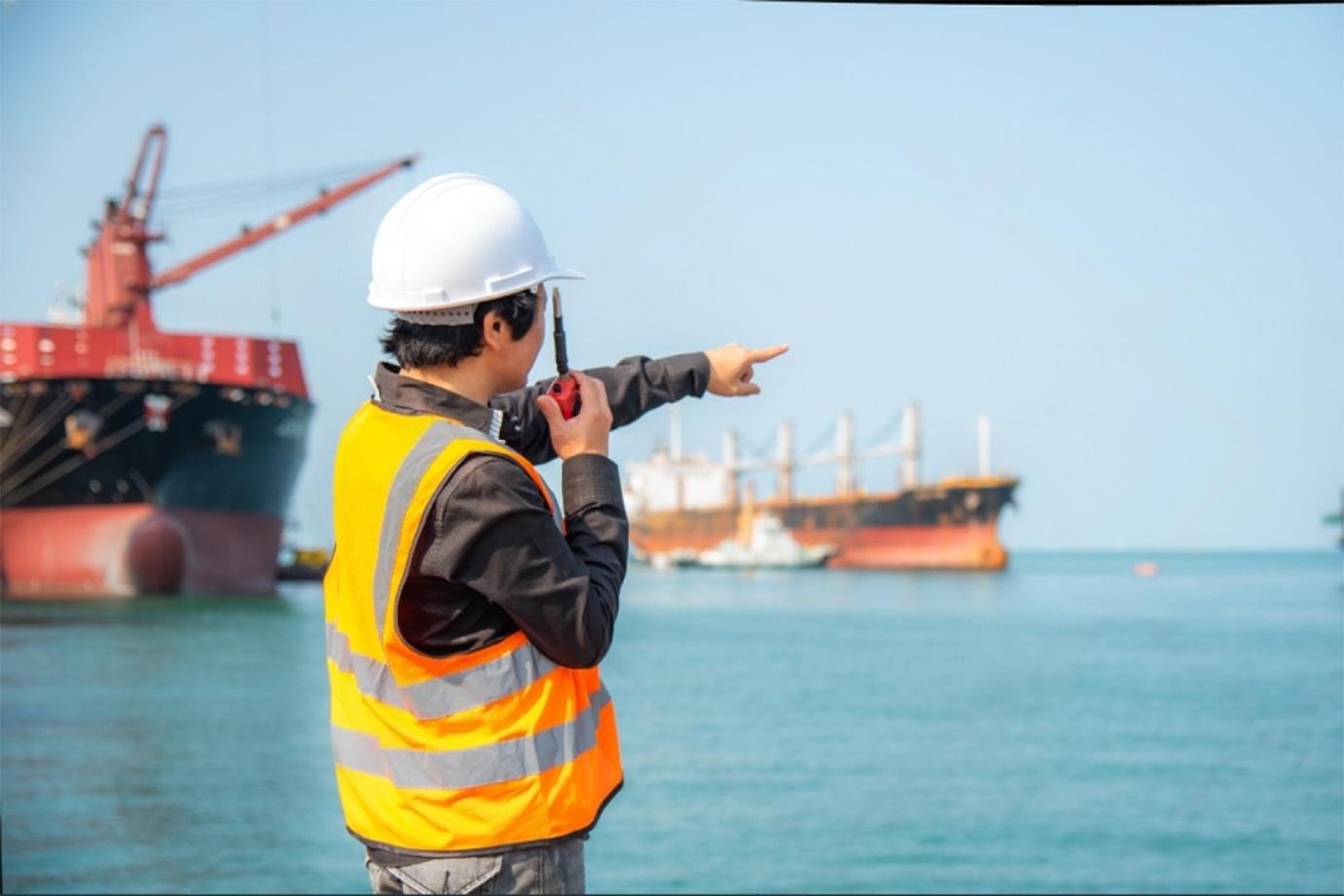
A ship agency helps turn the owner’s lay-up plan into practical local execution. The technical decision remains with the owner, vessel manager, class society, flag administration, and insurer. The ship agency supports the Indonesian side of the operation.
For lay-up vessels in Indonesia, a ship agency may coordinate arrival formalities, port or anchorage communication, crew change, CTM delivery, fresh water, provisions, spare parts, waste disposal, underwater services, technician attendance, surveyor attendance, and daily reporting. Because a lay-up involves a continuous port presence rather than a standard quick turnaround, your chosen representative must have deep operational reach. These extensive ongoing needs fall under the broader umbrella of ship agency services in Indonesia, which provide the compliance framework required to sustain an asset safely over months or even years of inactivity.
This support is especially useful because lay-up is not a one-time arrangement. Even when a vessel is inactive, local needs continue. Crew may need to move. Supplies may need to be delivered. Inspectors may need access. Hull condition may need to be checked. Waste may need to be handled through approved channels.
Lay-Up Vessel Process in Indonesia
The process usually starts before the vessel arrives. The owner or vessel manager should first define the lay-up type, expected duration, preferred location, crew plan, maintenance scope, and reactivation target.
After that, the ship agency can assist with local feasibility checks. This includes reviewing anchorage suitability, service access, local requirements, launch boat availability, security considerations, and vendor support.
Once the vessel arrives, coordination may include clearance handling, anchorage arrangements, authority communication, crew movement, and initial service setup. During the lay-up period, the vessel should be monitored through inspection records, maintenance follow-up, service reports, and regular communication with the owner or manager.
Before reactivation, the vessel may require surveyor attendance, underwater inspection, hull cleaning, spare parts delivery, crew mobilization, technical attendance, and outward clearance support.
Inspection and Maintenance During Lay-Up
Inspection and maintenance are essential during lay-up because vessel deterioration can continue even when the ship is not trading. Marine growth can develop on the hull and propeller. Machinery can suffer from humidity, corrosion, or lack of movement. Safety equipment can become unreliable if not checked.
A practical lay-up inspection plan should cover hull condition, mooring arrangement, machinery preservation, electrical systems, fire safety equipment, bilges, ballast areas, deck condition, accommodation, waste status, and security arrangements.
Underwater inspection is often useful for lay-up vessels because it gives the owner a clearer picture of hull condition without waiting until reactivation. Photo and video reporting can also support technical decision-making, insurance review, and future maintenance planning.
Maintenance should be aligned with the lay-up type. Hot lay-up may require more frequent machinery checks because some systems remain active. Cold lay-up may require deeper preservation because many systems are shut down.
Documents Commonly Required for Lay-Up Vessel Support in Indonesia
Document requirements may vary depending on the port, anchorage, vessel type, and requested services. However, owners should usually prepare:
- Vessel particulars
- Certificate of Registry
- Class certificates
- P&I certificate
- Crew list
- Last port clearance
- Lay-up plan
- Mooring plan
- Security plan
- Waste information, where applicable
- Agency appointment letter
Sharing these documents early allows the local agent to check the requirements before the vessel enters Indonesian waters. It also helps reduce unnecessary back-and-forth during arrival and service coordination.
Why Ship Agency Coordination Is Important
For lay-up vessels in Indonesia, ship agency coordination helps owners keep the vessel attended and documented. The agency becomes the local contact point for port stakeholders, vendors, surveyors, crew movement, and daily operational needs.
This coordination can help owners manage costs, maintain compliance, protect vessel condition, and prepare for future reactivation. It also gives the owner clearer visibility when the vessel is positioned far from the technical or commercial office.
A lay-up vessel should not become an unmanaged asset. With the right local support, the vessel can remain controlled, serviceable, and ready for the next operational plan.
Balancia Ship Agency Support for Lay-Up Vessels in Indonesia
Balancia Ship Agency supports shipowners, vessel managers, charterers, and maritime operators that need practical assistance for lay-up vessels in Indonesia. As a husbandry specialist across Indonesia, Balancia can coordinate the services that continue even when a vessel is not trading.
Support may include lay-up anchorage coordination, port agency assistance, crew change arrangement, CTM delivery, spare parts delivery, fresh water and provision supply, technician attendance, underwater inspection, hull cleaning coordination, waste disposal coordination, security support where required, and reactivation assistance.
For owners considering a lay-up ship or lay-up vessel in Indonesian waters, strong local coordination helps protect the vessel, support compliance, and keep reactivation planning under control.
People Also Ask About Lay-Up Vessels in Indonesia
How to arrange lay-up vessels in Indonesia?
To arrange lay-up vessels in Indonesia, the owner should define the lay-up type, expected duration, preferred location, crew plan, and maintenance requirements. A local ship agency can then check authority requirements, anchorage suitability, vendor availability, launch boat access, and husbandry support.
What is a lay-up ship?
A lay-up ship is a vessel temporarily taken out of commercial operation while being preserved and monitored for future use. It may remain at anchorage, berth, mooring buoy, or another approved location.
What is the difference between hot lay-up and cold lay-up?
Hot lay-up keeps the vessel more operational and allows faster reactivation. Cold lay-up shuts down more systems and reduces daily operating cost, but reactivation usually takes longer and may require more technical preparation.
How does a ship agency support crew change during lay-up?
A ship agency coordinates local immigration procedures, transport, launch boat movement, hotel arrangements where required, and communication between the vessel, owner, and local stakeholders.
Can underwater inspection be arranged for lay-up vessels in Indonesia?
Yes. Underwater inspection can be arranged in many Indonesian port and anchorage areas, depending on local permission, weather, safety conditions, diving availability, and vessel position.
Common Challenges in Lay-Up Vessel Management
Lay-up can look simple from the commercial side, but practical problems can appear quickly. Common issues include unclear local requirements, poor anchorage selection, limited launch boat access, marine growth, weak maintenance records, security exposure, crew welfare concerns, waste handling restrictions, and late reactivation planning.
These risks can be reduced when the lay-up plan is treated as a controlled vessel operation from the first day. The vessel may not be trading, but it still needs supervision, proper records, and reliable local coordination.
BALANCIA SHIP AGENCY
HQ Address : Komplex Ruko Golden City Block C No.3A, Batam City, Indonesia 29432
www.balancia.co.id
Mobile Ph. : +628112929654
Office Ph. : +627784883769
References:
- Apa Maksud dari “Ship Lay Up”? Ini Penjelasannya. (2023, July 17). Retrieved from Ilmu Kapal dan Logistik: https://www.kapaldanlogistik.com/2023/07/penjelasan-ship-lay-up-dan-tipenya.html
- Ship lay-up guidance – mooring, location & manning. (2020, August 27). Retrieved from Britannia P&I: https://britanniapandi.com/2020/08/guidance-on-ship-lay-up/
- Ship Lay-up Guide. (n.d.). Retrieved from BIMCO: https://www.bimco.org/products/publications/titles/ship-lay-up-guide/
- NI545 Guidance for the lay-up and reactivation of ships. (n.d.). Retrieved from Bureau Veritas: https://marine-offshore.bureauveritas.com/ni545-guidance-lay-and-reactivation-ships
- Safe and cost-efficient lay-up of vessels. (n.d.). Retrieved from DNV: https://www.dnv.com/services/safe-and-cost-efficient-lay-up-of-vessels/
- Review of Maritime Transport 2025. (2025). Retrieved from UNCTAD: https://unctad.org/publication/review-maritime-transport-2025
- Layup Anchorage. (n.d.). Retrieved from PT Pelabuhan Kepri: https://pelabuhankepri.co.id/en/layup-anchorage/