Understanding the Impact of Carbon Intensity Indicator (CII) on Ship Agency Services in Indonesia
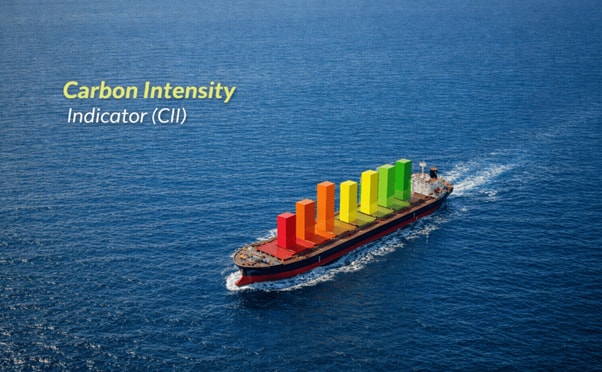
The introduction of the Carbon Intensity Indicator (CII) has changed how vessel performance is evaluated across global shipping. Since its implementation, vessels above 5,000 GT are assessed annually based on their operational efficiency, linking daily voyage decisions directly to environmental performance. In Indonesia, this shift has also influenced how port calls are managed.
From Operational Support to Performance Coordination
Ship agency services were traditionally focused on handling port formalities and coordinating vessel operations during port calls. With the introduction of CII, the scope has expanded.
Operational efficiency is now closely tied to environmental performance, which means that how a vessel arrives, waits, and operates in port contributes to its overall rating. As a result, ship agencies are increasingly involved in aligning port call activities with efficiency targets rather than simply facilitating them.
For ship owners, this means that port operations are no longer isolated from performance metrics, but part of a broader efficiency strategy.
Managing Arrival Timing to Reduce Idle Time
One of the most direct impacts of CII is the need to reduce unnecessary waiting time. Long periods at anchorage increase fuel consumption relative to distance traveled, which can negatively affect a vessel’s rating.
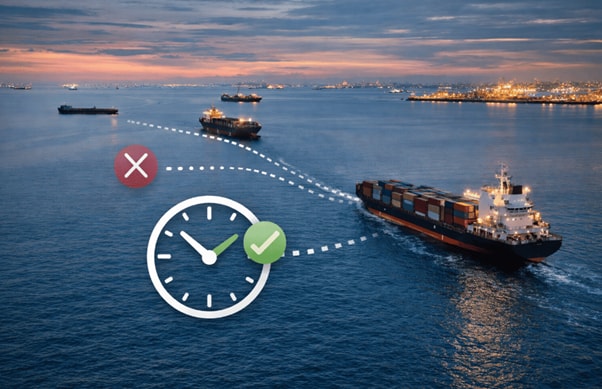
Ship agencies coordinate closely with port authorities and terminals to improve arrival timing. Instead of vessels arriving early and waiting for berth availability, coordination focuses on aligning arrival with actual berth readiness.
This type of planning supports more controlled sailing speeds between ports and reduces idle time, helping improve operational efficiency while supporting better CII outcomes.
Supporting Accurate Operational Data Reporting
CII performance depends on accurate operational data such as fuel consumption, sailing time, and distance traveled. This data is no longer only reviewed at the end of the year, but is increasingly monitored throughout the vessel’s operation.
Ship agencies support the collection and coordination of port-related data, ensuring that voyage information is recorded accurately and can be shared with relevant stakeholders. This includes time spent at anchorage, port stay duration, and operational delays.
For ship owners, having reliable and timely data allows better monitoring of vessel performance and helps avoid discrepancies in efficiency calculations.
Strengthening Coordination Between Stakeholders
CII performance is influenced by multiple parties, including ship owners, charterers, and port operators. Each party affects how the vessel is operated, from speed decisions to cargo readiness and port efficiency.
Ship agencies act as the coordinating link between these parties at the port level. By maintaining clear communication between stakeholders, operational decisions can be better aligned with efficiency goals.
For example, coordination on cargo readiness and berth planning can help reduce unnecessary delays, supporting both operational efficiency and environmental performance.
Supporting Efficiency-Driven Port Operations
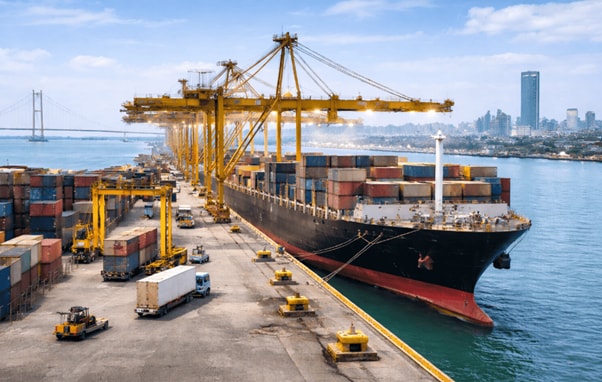
Certain port activities can also influence a vessel’s efficiency performance. Measures such as reducing turnaround time, minimizing delays, and optimizing service coordination contribute to better operational outcomes.
Ship agencies facilitate these improvements by ensuring that all port services, from clearance to cargo handling, are arranged in a way that supports smooth and efficient operations. In some ports, additional measures such as shore-based power supply or optimized service scheduling may also be considered.
For ship owners, efficient port operations are no longer only about time savings, but also about maintaining a favorable efficiency rating.
Providing Operational Insight for Better Planning
As CII becomes more relevant, operational planning requires a more detailed view of how each voyage and port call affects overall performance. Certain routes, delays, or operational patterns may have a greater impact on efficiency than expected.
Ship agencies, through their local knowledge and coordination role, can provide insights into port conditions, congestion levels, and operational risks that may influence vessel performance.
This allows ship owners to plan port calls more carefully, taking into account not only operational feasibility but also the potential impact on efficiency ratings.
Aligning Operational Decisions with Long-Term Performance
CII introduces a longer-term perspective on vessel operations. Performance is not measured only by individual port calls, but by the cumulative efficiency of the vessel over time.
This means that decisions made during each port call, including arrival timing, waiting time, and operational efficiency, contribute to the overall rating. Lower ratings may affect commercial attractiveness, while higher ratings may provide operational advantages.
By aligning port operations with efficiency goals, carbon intensity indicator on ship agency services becomes a practical consideration in maintaining both operational performance and long-term competitiveness.
In Indonesian ports, where operational conditions can vary significantly, structured coordination by ship agencies helps ensure that vessel operations remain efficient while supporting compliance with evolving environmental requirements.
BALANCIA SHIP AGENCY
HQ Address : Komplex Ruko Golden City Block C No.3A, Batam City, Indonesia 29432
www.balancia.co.id
Mobile Ph. : +628112929654
Office Ph. : +627784883769
References:
- Bisht, D. (2026, January 23). Understanding the Carbon Intensity Indicator (CII) and Its Impact on Maritime Investment. Retrieved from Shipfinex: https://www.shipfinex.com/blog/carbon-intensity-indicator-cii#:~:text=A%20C%20rating%20indicates%20performance%20close,and%20maintain%20genuine%20commercial%20competitiveness.%22
- Rauca, L., & Batrinca, G. (2023). Impact of Carbon Intensity Indicator on the Vessels’ Operation and Analysis of Onboard Operational Measures. Sustainability, 15(14), 11387. https://doi.org/10.3390/su151411387