Are Your Vessel Turnarounds Slowing You Down? Here’s What to Check
The duration a vessel spends in port may appear brief, yet it holds significant operational and financial implications. In the fast-paced maritime industry, delays in vessel turnarounds often signal inefficiencies within port services. When timelines are missed, costs escalate, and vessel schedules are disrupted. The question is no longer whether speed matters, it is how it can be consistently achieved without compromising safety or compliance.
Understanding the Real Meaning of Turnaround Time
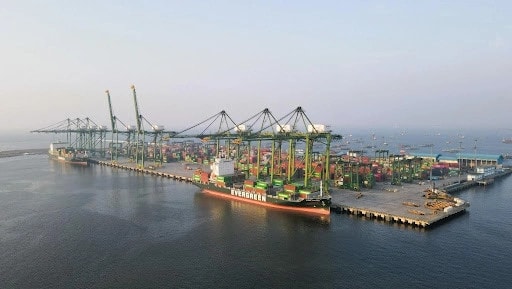
Vessel turnarounds refer to the total time a vessel remains in port to complete its scheduled operations, including berthing, cargo handling, customs clearance, maintenance, refueling, and crew changes. This period begins when the vessel arrives and concludes upon its departure. The efficiency of these operations has a direct impact on overall vessel productivity, port congestion levels, and service reliability.
Globally, container vessels spend an average of less than one day in port, yet the variation across regions is substantial. Some delays result from port congestion or poor weather conditions. Others stem from slower administrative processes, limited berth availability, or uncoordinated logistics. While certain elements remain beyond control, many delays are avoidable through improved communication, optimized scheduling, and the right port service strategies.
Balancia Ship Agency has consistently demonstrated that fast, organized, and well-planned port operations are not only possible but essential. Through dedicated pre-arrival planning and real-time coordination, vessel turnaround time can be significantly reduced without compromising operational integrity.
The Cost of Poor Coordination and Inefficient Port Services
One of the most common causes of extended vessel turnarounds is poor coordination among stakeholders. When vessel agents, terminal operators, stevedores, customs authorities, and service vendors operate in silos, delays become inevitable. Even minor misalignments can have a ripple effect. For example, late berth assignments may postpone cargo discharge, which in turn delays bunkering and customs inspections.
Berthing efficiency depends not only on space availability but also on accurate scheduling and readiness. Vessels arriving ahead of schedule may find their berth unavailable, while those arriving late may disrupt the port’s traffic flow. Balancia addresses this challenge through precise ETA updates and continuous communication with port authorities, ensuring berths are assigned and prepared in advance.
Cargo handling is another area where delays frequently occur. Unloading and loading operations require synchronized planning between the vessel’s crew, crane operators, and logistics teams. If equipment is not ready or if there is a shortage of labor, the entire workflow slows down. Port agents must ensure that terminal resources are secured and that cargo documentation is processed before the vessel’s arrival.
Customs, Maintenance, and Simultaneous Operations
The role of customs clearance in vessel turnarounds cannot be overstated. Regulatory delays are a frequent bottleneck, especially when documents are not submitted in advance or if physical inspections are triggered unnecessarily. Balancia mitigates these risks by utilizing electronic documentation systems and engaging customs authorities early in the process. Pre-arrival submission of clearance requests allows operations to begin promptly upon docking.
While the vessel is alongside, essential services such as refueling, underwater maintenance, and crew changes must often take place. If these operations are poorly timed or conflict with cargo handling, the result is either inefficiency or operational risk. Balancia ensures that such services are carried out simultaneously yet safely, with all parties informed and properly scheduled.
Crew transfers, in particular, involve multiple moving parts: immigration formalities, medical checks, accommodation, and transport. Any disruption in this chain affects not only the crew but the vessel’s ability to depart as planned. With Balancia’s experience, these transitions are handled smoothly and in full compliance with port regulations.
Technology as a Catalyst for Faster Vessel Turnarounds
Advanced technology is increasingly being adopted to enhance port services and reduce vessel turnaround time. Digital port call platforms allow agents and operators to monitor operations in real time, identify bottlenecks, and adjust plans accordingly. These systems support faster decision-making and eliminate unnecessary manual processes that often slow operations.
Predictive scheduling, enabled by live AIS data and cargo tracking, allows for more efficient berth planning. Meanwhile, automated documentation platforms reduce the administrative burden and minimize the risk of errors or omissions. At Balancia, these technologies are actively used to streamline coordination and deliver real-time updates to stakeholders, including shipowners, port officials, and vendors.
The integration of technology does not replace human oversight—it enhances it. By combining digital tools with experienced on-the-ground teams, vessel turnarounds are completed with greater precision and fewer interruptions.
The Broader Impact of Efficient Turnarounds
Reducing vessel turnaround time brings measurable benefits to all parties involved. Shipowners and charterers enjoy increased voyage frequency and improved cost-efficiency. Port operators benefit from higher berth availability and throughput. Cargo owners, particularly those shipping time-sensitive or perishable goods, gain confidence in delivery schedules.
Logistics providers see improved predictability in their supply chains, while service vendors—from fuel suppliers to technical inspectors—can plan more effectively and deliver services without delay. In every case, a shorter turnaround translates to higher performance, stronger partnerships, and enhanced port competitiveness.
For Balancia, every port call represents an opportunity to demonstrate the value of proactive planning, precise coordination, and commitment to operational excellence. By focusing on these principles, vessel turnarounds handled by Balancia remain consistently on time, cost-effective, and compliant with all international standards.
Turning Time into an Advantage
In a global shipping environment where margins are tight and schedules are critical, vessel turnarounds serve as a key performance indicator. Prolonged port stays not only disrupt logistics but also increase operational costs. By recognizing the importance of efficient port services and partnering with experienced agents like Balancia, shipowners can convert turnaround time from a liability into a competitive advantage.
The future of port efficiency lies in collaboration, technology, and adaptability. With every port call, Balancia continues to prove that fast, safe, and strategic vessel turnarounds are not an aspiration—but a standard.
BALANCIA SHIP AGENCY
HQ Address : Komplex Ruko Golden City Block C No.3A, Batam City, Indonesia 29432
www.balancia.co.id
Mobile Ph. : +628112929654
Office Ph. : +627784883769
References:
- Dupuis, M. (2024, August 15). Reducing Port Call Turnaround Time: Insights from the Dock + 4 Ways to Improve It Today. Retrieved from Use Base: https://www.usebase.io/port-call-turn-around-time/
- Port Efficiency and Vessel Turnaround. (2021, April 22). Retrieved from Sinay: https://sinay.ai/en/port-efficiency-and-vessel-turnaround-time/