Ship Agency’s Role in Navigating Indonesian Territorial Sea Regulations
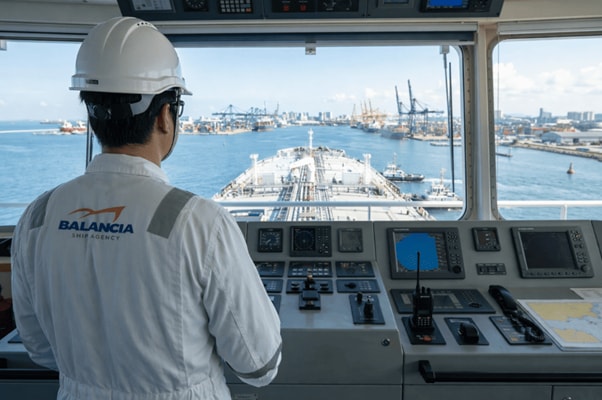
Ship agency expertise is essential for navigating territorial sea requirements under Indonesian regulations. With Indonesia’s vast maritime boundaries, a ship agency ensures vessels comply with legal frameworks while maintaining smooth operations. Their role is critical in balancing efficiency with adherence to territorial sea laws.
Under international maritime conventions, foreign vessels are permitted to pass through Indonesian waters under the principle of innocent passage. However, this passage must follow specific operational conditions defined under Indonesian maritime legislation.
Transit through the archipelago must remain continuous, direct, and conducted without activities that could threaten security, safety, or environmental protection. Vessels passing through Indonesian waters are expected to maintain a steady course and avoid unnecessary deviations from the intended transit route.
To support safe international navigation, Indonesia has designated official transit corridors known as Archipelagic Sea Lanes (ALKI). These routes guide international maritime traffic across Indonesian waters while allowing authorities to monitor vessel movements in accordance with Indonesian territorial sea regulations.
Reporting Requirements When Entering Indonesian Ports
When a vessel plans to call at an Indonesian port, regulatory procedures require communication with local maritime authorities prior to arrival. Reporting is typically made to the harbourmaster or Vessel Traffic Service (VTS) responsible for monitoring ship movements.
Advance reporting allows authorities to coordinate vessel traffic, manage port access, and ensure navigational safety within busy shipping areas. Information submitted usually includes vessel details, estimated time of arrival, and operational intentions during the port call.
This reporting process forms an essential part of Indonesian territorial sea regulations, ensuring that vessel movements within national waters remain transparent and properly supervised.
Anchoring Rules Within Indonesian Waters
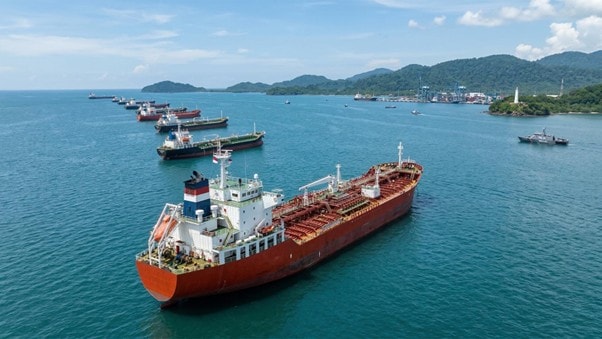
Anchoring regulations represent one of the most frequently misunderstood aspects of Indonesian territorial sea regulations. Many vessels mistakenly assume that offshore waiting areas are located in international waters, when in fact they may still fall within Indonesia’s archipelagic boundaries.
When your vessel intends to anchor within Indonesian waters, several important rules must be considered:
- Anchoring generally requires prior approval from the relevant maritime authorities.
- Unauthorized anchoring may result in vessel detention and investigation.
- Offshore waiting areas often referred to as “OPL” may still be located within Indonesian jurisdiction.
- Authorities have increased enforcement in several regions, particularly near the Riau Islands and major international shipping routes.
If your vessel requires anchoring while awaiting orders, arranging port entry, or conducting operational preparations, authorization should always be obtained beforehand to avoid regulatory complications.
Cabotage Policy and Domestic Transport Restrictions
Another important element of Indonesian territorial sea regulations is the national cabotage policy governing domestic maritime transport.
Under this policy, foreign-flagged vessels are generally prohibited from transporting goods or passengers between Indonesian ports or islands. Domestic shipping activities are reserved for Indonesian-flagged vessels in order to support the country’s national maritime industry.
International shipping operations remain fully permitted. However, ship owners must ensure that cargo movements within Indonesian waters do not fall within domestic transport activities restricted under the cabotage framework.
AIS Requirements and Operational Compliance
Vessels navigating Indonesian waters must maintain an active Automatic Identification System (AIS) while operating within territorial boundaries. AIS enables maritime authorities to monitor ship movements, improve navigational safety, and maintain situational awareness in heavily trafficked sea lanes.
Maintaining AIS transmission is an important component of Indonesian territorial sea regulations, supporting both maritime security and traffic management.
In addition to AIS compliance, vessels operating in Indonesian waters must also meet environmental protection standards, seaworthiness requirements, and maintain appropriate pollution insurance coverage.
Understanding Indonesia’s Archipelagic Maritime Boundaries
One reason for confusion surrounding Indonesian territorial sea regulations is the country’s unique archipelagic baseline system. Unlike continental coastal states, Indonesia’s maritime boundaries are measured from baselines connecting the outermost islands of the archipelago.
This means waters that may appear open on certain navigational charts can still fall within Indonesia’s internal or territorial waters.
Incorrect interpretation of these maritime boundaries has occasionally led vessels to anchor or conduct operations in restricted areas without realizing they were within Indonesian jurisdiction. Careful chart review and operational planning therefore remain essential when navigating near Indonesian maritime zones.
The Importance of Local Coordination
Operating within Indonesian waters often requires communication with several authorities, including harbourmasters, maritime security agencies, and port administrations. As a result, compliance with Indonesian territorial sea regulations frequently depends on clear coordination with local maritime institutions.
When vessels plan anchoring activities, port calls, offshore operations, or ship-to-ship transfers, proper coordination with local authorities helps ensure that all operational procedures remain aligned with national maritime laws.
With accurate planning, regulatory awareness, and proper operational coordination, vessels can navigate Indonesian waters efficiently while avoiding misunderstandings related to territorial sea regulations.
BALANCIA SHIP AGENCY
HQ Address : Komplex Ruko Golden City Block C No.3A, Batam City, Indonesia 29432
www.balancia.co.id
Mobile Ph. : +628112929654
Office Ph. : +627784883769
References:
- The Right of Innocent Passage and Anchoring Rules in Indonesian Waters. (2023, August 4). Retrieved from IDS Attorneys: https://idsattorneys.com/insight/the-right-of-innocent-passage-and-anchoring-rules-in-indonesian-waters
- Vessel detentions for illegal anchoring in Indonesian waters. (2022, April 20). Retrieved from Gard: https://gard.no/en/insights/vessel-detentions-for-illegal-anchoring-indonesian-waters/