Understanding VAT Regulations for Ship Agency Services in Indonesia
Ship agency services conducted in Indonesian ports operate within the national taxation framework that includes Value Added Tax, locally known as Pajak Pertambahan Nilai (PPN). Indonesia applies VAT to most goods and services supplied within its territory, including certain operational and administrative services related to vessel calls. Understanding VAT regulations for ship agency services helps clarify how port-related costs are structured and supports financial transparency in maritime operations.
Indonesia’s VAT Structure and Current Rates
Indonesia applies a 12 percent VAT rate to most taxable goods and services. The government retains the authority to adjust this rate between 5 percent and 15 percent through regulatory measures, allowing flexibility within the national taxation system.
Businesses operating in Indonesia are required to register for VAT once their annual revenue reaches IDR 4.8 billion, although voluntary registration is permitted for smaller entities. Once registered as taxable entrepreneurs, businesses must charge VAT on applicable services and report their tax liabilities accordingly.
Certain categories of goods and services are excluded from VAT under Indonesian tax law. These include essential commodities, healthcare services, educational activities, financial services, and several other public-interest sectors. In addition, exports of goods and certain services may qualify for a zero percent VAT rate, reflecting the government’s policy to support international trade.
Application of VAT to Ship Agency Services
Ship agency services typically involve administrative and operational coordination required for vessels calling Indonesian ports. These services may include documentation management, port clearance arrangements, liaison with customs and port authorities, and the organization of husbandry services.
Because these activities are generally performed within Indonesian jurisdiction, agency service fees may fall within the scope of VAT regulations for ship agency services. The applicable VAT treatment depends on the classification of the service and whether it is considered a domestic service or connected to international shipping operations.
Zero-Rated VAT for International Maritime Services
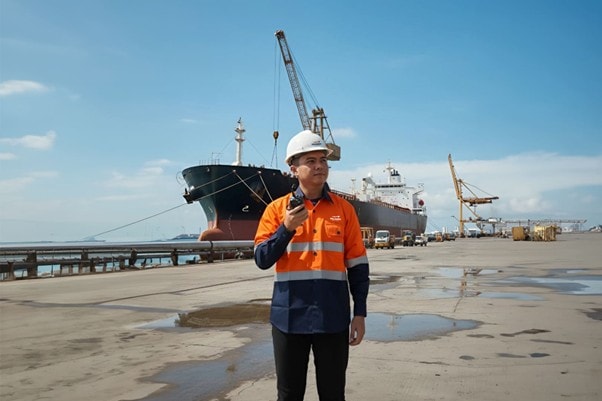
Indonesia’s tax regulations recognize that maritime transport frequently supports international trade. Certain services directly connected to international shipping may therefore qualify for zero-rated VAT, meaning the service remains taxable but is charged at a rate of zero percent.
Eligibility for this treatment depends on whether the service meets the criteria for exported services under Ministry of Finance regulations. Supporting documentation must demonstrate that the service is delivered to a foreign recipient and relates to international transport activities. Proper classification is therefore essential when determining how VAT regulations for ship agency services are applied.
Distinguishing Agency Fees from Operational Disbursements
Financial clarity within ship agency transactions depends on distinguishing agency service fees from operational expenses incurred on behalf of the vessel.
Agency service fees represent compensation for administrative coordination and operational support provided by the agent. When these services fall within the scope of taxable services under Indonesian law, VAT may be applied accordingly.
Operational disbursements, however, consist of payments made to port authorities and third-party service providers. Examples include pilotage charges, harbor dues, tug services, terminal fees, and other port-related expenses. Because these costs are reimbursed by the vessel operator and are not treated as income for the ship agent, they are generally not subject to VAT when passed through as disbursements.

Documentation and Compliance Requirements
Compliance with VAT regulations for ship agency services requires proper documentation and reporting. Ship agents registered as taxable entities must issue official tax invoices through the government’s e-Faktur system, which records the applicable VAT treatment for each service transaction.
VAT liabilities must be reported and settled on a monthly basis, ensuring that taxable services are recorded accurately within Indonesia’s tax administration framework. When services qualify for zero-rated VAT or special facilities related to maritime transport, supporting documentation must be maintained to confirm eligibility.
Supporting Financial Transparency in Ship Agency Operations
Clear financial documentation plays an important role in maritime operations where multiple services are coordinated during a vessel’s port call. Ship agency expenses are typically presented through the Proforma Disbursement Account before vessel arrival and finalized in the Final Disbursement Account after port operations are completed.
Within these financial statements, agency service fees are separated from operational disbursements paid to port authorities and service providers. When VAT applies to agency services, the tax component is presented clearly within the invoice structure.
Through accurate service classification, transparent invoicing, and proper documentation, compliance with VAT regulations for ship agency services can be maintained while ensuring clarity in the financial obligations associated with vessel operations in Indonesian ports.
BALANCIA SHIP AGENCY
HQ Address : Komplex Ruko Golden City Block C No.3A, Batam City, Indonesia 29432
www.balancia.co.id
Mobile Ph. : +628112929654
Office Ph. : +627784883769
References:
- Value Added Tax in Indonesia. (n.d.). Retrieved from Asean Briefing: https://www.aseanbriefing.com/doing-business-guide/indonesia/taxation-and-accounting/value-added-tax-in-indonesia
- VAT in Indonesia: Rates, registration requirements and compliance. (2026, February 19). Retrieved from Acclime: https://indonesia.acclime.com/guides/value-added-tax/